
Vietnam has rapidly grown into one of Asia’s most desirable locations for international hiring. Its profile of sustained economic development, a youthful and highly educated population, competitive labor costs, and an increasing digital economy has made it a favored destination for corporations wishing to form remote teams, establish regional operations, or support international expansion.
As more organizations embrace distributed workforce approaches, the country’s economic performance reflects this momentum. Vietnam’s economy grew by an impressive 8.02% in 2025, making it one of the fastest-growing economies in Asia.
However, there are several difficulties when employing workers in Vietnam. The nation’s labor laws, employment contract requirements, payroll policies, personal income tax obligations, mandated social insurance contributions, statutory employee benefits, and termination procedures must all be followed by employers.
This is where an Employer of Record (EOR) becomes a crucial partner. This article will explain how an EOR operates in Vietnam, the reasons why multinational corporations are hiring more Vietnamese talent, the country’s important payroll and employment laws, required employee benefits, common compliance risks, and how working with an EOR can help you hire faster, legally, and confidently in one of Southeast Asia’s most dynamic labor markets.
What is an Employer of Record (EOR) in Vietnam?
An EOR is a third-party company that hires employees on behalf of an organization in Vietnam, thereby acting as the local legal employer without the organization having to set up a local legal entity (typically a company). In a regular EOR agreement, the client company maintains complete control over the employee’s daily tasks, responsibilities, and performance, but the EOR in Vietnam becomes the formal employer on paper.
This structure enables businesses to expand globally while staying compliant with local employment laws. Examples of EOR providers include Deel, Multiplier, Pebl, RemoFirst, and Oyster.
Key responsibilities of an EOR include:
• Payroll management
• Tax compliance
• Employee benefits
• Regulatory compliance
• Employment contracts
• Termination and off-boarding
Why Are Companies Hiring in Vietnam?
Companies are aggressively hiring in Vietnam due to its booming economy, cost-effective and competent workforce, and the country’s growth as a premier manufacturing and technological hub. Vietnam ranks fourth in the world for hiring optimism, with a net employment forecast of +47%. Most companies are turning to Vietnamese talent to fuel their growth. Here’s why:
• Large, young, and dynamic workforce
• Strong economic growth and strategic location
• Competitive labor costs
• Strategic location in Southeast Asia
• Government support and business-friendly reforms
• Rapid adoption of digital technologies, fintech, and renewable energy
Vietnam Employment Laws Every Global Employer Must Understand
Understanding Vietnam’s employment laws is essential for recruiting in a compliant manner. The foundation is the Labor Code 2019 (effective January 1, 2021), which is employee-friendly and emphasises written contracts, social protections, and clarified employer obligations. Complying with these legal requirements is crucial to avoiding compliance issues, financial penalties, and employment conflicts, whether you’re recruiting a single remote worker or assembling a whole team. Working with an EOR can make compliance easier for foreign organizations. Here are the key employment laws:
Employment Contracts: A documented labor contract (Hợp đồng lao động), ideally bilingual (Vietnamese + English for foreign-invested establishments), is required to formalize all work relationships. Mandatory clauses such as pay, working hours, probationary period, work location, and IP/confidentiality provisions must be included.
Mandatory Social Contributions: Vietnam’s Social, health, and unemployment insurance (SI/HI/UI) payments must be withheld and contributed to by employers. Total statutory payments cost businesses around 21.5% – 22% of the gross payroll, while employees contribute 10.5%.
Working Hours and Overtime Rates: A typical workweek consists of a maximum of 48 hours (usually 8 hours per day, six days a week). Depending on the industry, overtime is limited to 12 hours per day, 40 hours per month, or 200–300 hours per year and requires employee consent.
Strict Termination Rules: Termination and layoffs are governed by strict regulations; wrongful termination may result in reinstatement orders or substantial compensation. Termination is closely monitored and requires notice (usually between 30 and 45 days), due process, and legitimate grounds.
Leave Entitlements: Annual leave minimum of 12 days per year (increases with seniority). 10–11 public holidays annually, with New Year being the most significant. Paid sick leave (up to 30 days, depending on social insurance contributions). Maternity leave is compensated in full for six months through social insurance. The duration of paternity leave varies from 5 to 14 days.
Payroll and Tax Requirements in Vietnam
One of the most difficult parts of employing locally in Vietnam is handling payroll and taxes. Global employers must either develop substantial internal expertise or collaborate with an EOR to maintain compliance due to strict monthly deadlines, required contributions, and comprehensive reporting requirements. Here are some of the requirements:
Statutory Employer Contributions: These include Social Insurance (BHXH), Health Insurance (BHYT), Unemployment Insurance (BHTN), Trade Union Fee, etc.
Personal Income Tax (PIT): Taxable income includes salary, bonuses, allowances, and certain benefits.
Key Deadlines and Compliance: These includes Monthly Tax Declaration, Year-end Reconciliation, Bonuses and Allowances.
Employee Benefits and Mandatory Employer Obligations in Vietnam
Vietnam’s labor regulations prioritize social protection and worker welfare. Complying with recruiting guidelines and keeping good employee relations requires an understanding of the benefits and employer obligations. An EOR can seamlessly enable global companies to meet these requirements. They include:
• Retirement and pension benefits
• Health insurance (HI)
• Occupational accidents and diseases
• Unemployment insurance
• Paid annual leave
• Maternity and paternity benefits
Key Compliance Risks When Hiring Employees in Vietnam
Vietnam’s labor laws are comprehensive and strictly enforced, despite the country’s great potential for attracting talent from around the world. Significant financial penalties, legal challenges, business disruptions, and reputational harm can result from noncompliance. The following are the main compliance concerns that all foreign employers need to be aware of:
• Misclassifying employees as independent contractors
• Payroll and tax errors
• Failure to make mandatory social insurance contributions
• Violating working hours and overtime regulations
• Improper employee termination or disciplinary actions
• Non-Compliance with leave and employee benefits
EOR vs. Legal Entity in Vietnam
Here is a comparison that highlights the key differences to help organizations choose between using an EOR and establishing a legal entity.
| Criteria | Employer of Record (EOR) | Legal Entity (Own Company Setup) |
| Setup Time | Fast hiring of employees within 1–14 days. | 3–6+ months (company registration, bank accounts, tax IDs, etc.) |
| Control Over Operations | Limited control (EOR is legal employer) | Full control over employees and operations |
| Compliance Responsibility | Handled entirely by EOR | Your company is fully responsible |
| Legal Risk | EOR ensures compliance | Company bears full legal responsibility |
| Cost Structure | Lower upfront cost; service-based pricing | High initial and ongoing operational costs |
| Legal Employer | The EOR | The company |
| Risk Exposure | Low risk | High risk exposure |
| Exit / Offboarding | Simple and low-cost | Complex, expensive, and lengthy |
| Best For | Small/medium teams, quick expansion, testing the market, and remote hiring. | Long-term presence, large-scale operations. |
When Should You Use an EOR in Vietnam?
EOR is especially useful for companies looking to enter or grow in the Vietnamese market with speed, flexibility, and lower risk. Here are key situations where using an EOR in Vietnam is the most effective approach:
• When you need to hire employees fast
• When you are testing the Vietnamese market
• When you have a small or medium team
• When you lack local HR/legal expertise or resources
• When you want to minimize risk and legal exposure
• When you do not want to establish a local entity
Top Employer of Record Providers in Vietnam
Choosing the right EOR provider is crucial for companies trying to effectively hire, manage, and grow teams in Vietnam. The ideal EOR should offer strong compliance support, seamless payroll management, local expertise, and reliable integrations with your existing business tools. Here are some of the leading EOR companies in Vietnam:
1. Deel
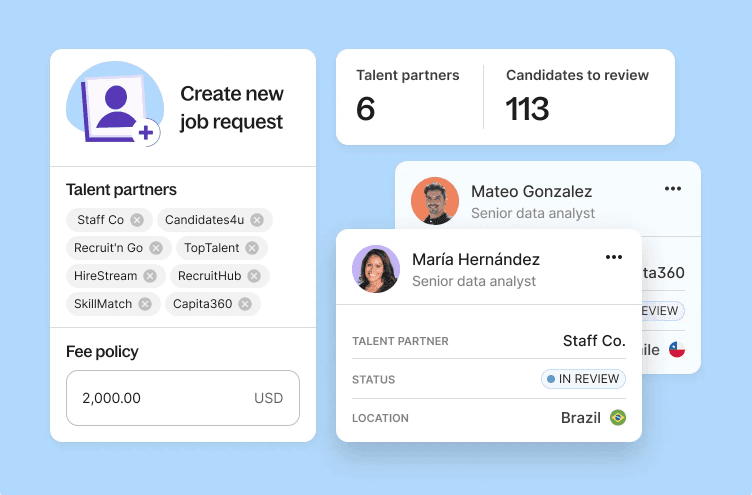
Unlike platforms that rely on third-party partners, Deel uses its own local entities in Vietnam. This drastically reduces compliance risks, speeds up onboarding, and ensures absolute bulletproof legal protection under Vietnamese labor laws.
Whether you are managing contractors or hiring full-time staff, Deel handles the end-to-end payroll, taxes, and local compliance so you can focus on growth. Pricing typically starts at around $599 per employee/month.
• Provides automation and integrations with tools like Workday, QuickBooks, and Slack.
• Best for companies that want a premium, all-in-one global hiring platform with strong automation, deep integrations, and enterprise-grade compliance across 150+ countries.
👉 Ready to hire in Vietnam? Create your Deel account and onboard talent today.
2. Multiplier
If you want absolute legal compliance without the premium enterprise price tag, Multiplier is the ultimate alternative to more expensive platforms. It allows you to onboard international talent in minutes across 150+ countries, including tough-to-navigate markets like Vietnam.
It is particularly appealing to startups and mid-sized businesses that wish to hire internationally without paying premium enterprise-level costs. And even despite the lower cost, it still delivers strong compliance coverage and essential HR tools.
• They generate compliant, localized employment contracts in minutes and onboard staff within 24–72 hours.
• Responsive customer support and region-specific expertise. Not sure if Multiplier or Deel is the better fit for you? Compare pricing, features, and ideal use cases in our Multiplier vs Deel comparison post.
• Best for cost-conscious companies and startups looking for a reliable, affordable EOR solution.
👉 See How Much You Can Save: Get Started with Multiplier Today
3. Pebl
If you need a premium EOR partner capable of handling massive, large-scale international expansions, Pebl is an industry giant. Operating in over 185 countries with an incredibly deep footprint in markets like Vietnam. Pebl specializes in giving large or rapidly scaling companies bespoke, white-glove expansion solutions.
Backed by over a decade of compliance data and a brand-new, AI-first platform infrastructure, Pebl allows you to generate fully loaded, compliant quotes instantly and onboard talent in less than 24 hours.
• Provides a central platform for onboarding, managing, and paying international talent.
• Best for large or scaling companies that need white-glove support, consulting, and customized global expansion solutions.
👉 Deploy Global Talent in 24 Hours: Get an Instant Quote from Pebl
4. RemoFirst
RemoFirst cuts through the fluff to deliver robust, reliable global HR. By combining flat, transparent pricing with newly launched, AI-driven automation agents (for real-time payroll and task management), you get premium speed and compliance without the premium enterprise invoice.
They’re also one of the most affordable EOR providers; its pricing starts at approximately $199 per employee/month, making it a strong option for startups and small businesses looking to minimize costs while still maintaining compliance.
• Affordable pricing compared to many competitors.
• Access to global health coverage (medical, dental, vision).
• Best for budget-conscious startups and SMEs that want the lowest-cost EOR option with solid core compliance features.
👉 Calculate Your Savings: Get Started with RemoFirst for Just $199
5.Oyster
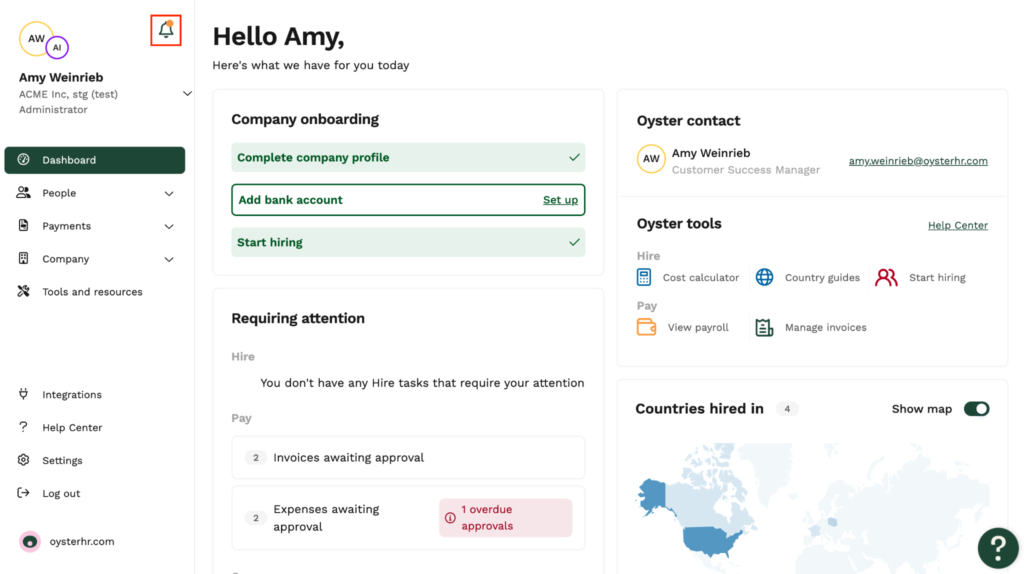
Oyster excels at treating international hires like true team members, not just line items on a spreadsheet. By offering top-tier local benefit packages, compliant equity (stock options) management, and a massive library of local employment insights, they ensure your global team feels valued from day one.
• Enables firms to manage both contractors and full-time employees on the same platform
• Manages international payroll in local currencies including health insurance and retirement plans.
• Best for Mid-sized to enterprise teams focused on employee experience, long-term retention, and structured global workforce management.
👉 Unlock Global Talent: Start Your Growth Journey with Oyster Today
Additionally, integrations can make or break your hiring workflow. Before signing with any EOR, verify how well it connects with your CRM using our free EOR – CRM compatibility checker.
Quick Comparison of Top EOR Providers in Vietnam
| Provider | Starting Price | Key Strength | Best For |
| Deel | $599/per employee/month | Scalability and Integrations | Global startups |
| Multiplier | $400/per employee/month | Affordability and Simplicity | Cost-conscious teams |
| Pebl | $599/per employee/month | Global expansion | Large companies |
| RemoFirst | $199/per employee/month | Lowest pricing | Startups & SMEs |
| Oyster | $699/per employee/month | Remote-first teams | Distributed teams |
Final Thoughts
Vietnam has become one of Southeast Asia’s most desirable locations for global employment due to its talented workforce, affordable labor costs, rapidly growing economy, and advantageous position for companies looking to expand into the area. In Vietnam, hiring workers involves more than just identifying qualified applicants.
The nation’s employment laws, payroll rules, personal income tax obligations, mandated social insurance contributions, statutory employee benefits, and termination procedures must all be navigated by employers. Failing to comply with these obligations can lead to costly penalties, legal disputes, and operational setbacks.
However, working with a reputable EOR may help your company access top local talent, speed up market entry, and safely expand into one of Asia’s fastest-growing economies, as Vietnam continues to solidify its place as a top global business and investment destination.
An EOR offers the knowledge and local compliance assistance required to ensure the effectiveness and success of your expansion into Vietnam, regardless of the size of your workforce. The future belongs to companies that act decisively. Those who effectively make use of Vietnam’s potential, backed by the appropriate compliance infrastructure, will have a major competitive advantage in the global marketplace and beyond.
Ready to build your team in Vietnam?
Explore these Employer of Record solutions today and turn opportunities into sustainable growth.