How did a shoe company convince hundreds of millions of people to hand over their run routes, workout history, and shopping habits and thank them for it?
That is the real story behind the swoosh. Nike does not just sell sneakers; it runs one of the most sophisticated customer relationship management operations on the planet, built on free apps, an addictive membership program, and a mountain of first-party data.
The result: at its peak, more than 300 million members and a digital business that nearly tripled its share of the company in four years. This is the Nike CRM case study, what they did, how they did it, and what your business can steal from the playbook.
I want us to put the athlete at the center of everything we do, and show them that magic you can only get from Nike. We’re a company of dreamers, optimists, and inventors, and our eyes are on the future — we’re going to simplify and go.
– Elliot Hill
History of Nike Timeline and Facts
Established as "Blue Ribbon Sports" by Phil Knight and his coach, Bill Bowerman
Graphic designer Carolyn Davidson created the famous Nike 'Swoosh' logo and sold it to the company for US$35
Nike manufactured its first uniforms for a professional sports team
Nike moves into English football, signing a kit (uniform/apparel) deal with Arsenal.
Phil Knight steps down as the CEO and President of Nike, but continues as chairman
Nike announces its "Consumer Direct Offense" at its October Investor Day
Nike buys consumer-data analytics firm Zodiac to model customer lifetime value
Nike acquires predictive-analytics company Celect to forecast demand and personalize its apps
Nike layers on "Consumer Direct Acceleration," doubling down on digital as stores close during the pandemic; it adds roughly 55 million new members that year
Nike acquires data-integration startup Datalogue to unify data across its ecosystem
Nike's four apps hit 500 million users in a single quarter
Digital sales decline for the first time in nine years, and Nike pivots back toward wholesale partners, returning to Amazon and Foot Locker
Before you proceed, you can get instant, no-obligation CRM quotes. Just answer a few quick questions and we’ll match you with top providers tailored to your business.
Nike & Its CRM Technology
Here is where Nike breaks from the typical case study: there is no single, off-the-shelf CRM you can point to and say “that’s the Nike system.”
However, Nike’s VP of Marketing Data, Linda Cereda, describes a largely proprietary setup: the company has “built a unified customer data platform with underlying ML/AI models that power everything from our journey orchestration to how we personalise digital experiences”. In other words, Nike built much of its own customer engine rather than buying one, just like that of Apple.
Nike was able to achieve this by acquiring its capabilities in targeted pieces: Zodiac for customer lifetime value, Celect for demand prediction, and Datalogue to stitch all the data together.
The lesson hiding in here: your CRM strategy is not really about the logo on the software. It is about owning the customer relationship and the data behind it.
5 Ways Nike Uses Customer Relationship Management (CRM)
1. Free Membership as the Data Engine
It was Alex Hormozi who said, “The only thing that beats “free” is “fast.” Nike’s free membership remains pivotal to its customer relationship management strategy and brand growth.
Nike Membership is free to join, and that is precisely the point. Members get free shipping on orders over $50, a 60-day wear-test return window, member-only products, and exclusive experiences. In exchange, Nike gets a named, trackable relationship instead of an anonymous transaction.
The resultant effect of this singular move has been tremendous and often attributed as the engine of of Nike’s entire direct-to-consumer strategy. It helped the company in reaching 160 million active members by late 2021, with members driving 50% of in-store demand.
2. Fitness Apps That Collect Deep First-Party Data
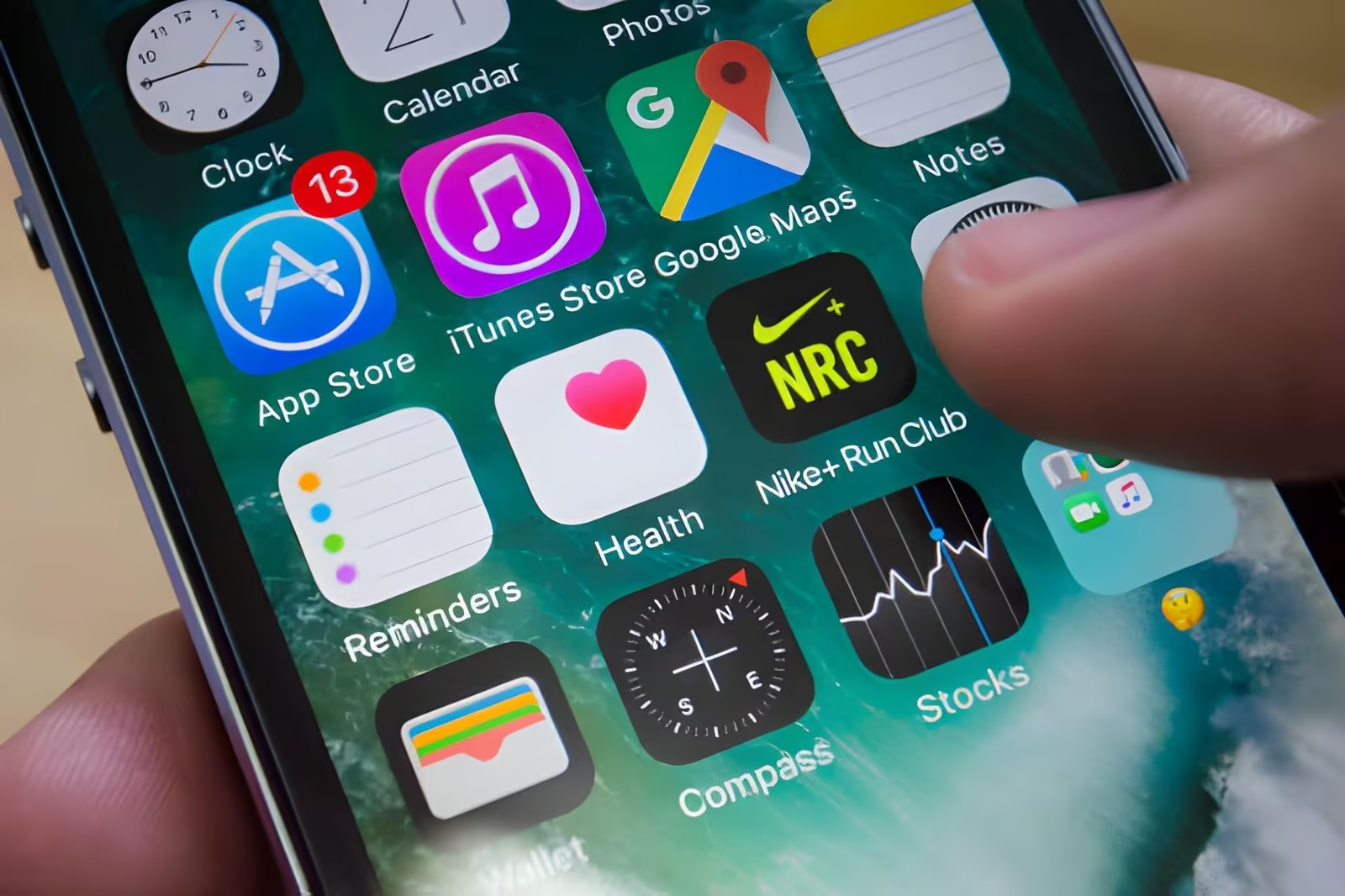
Nike Run Club and Nike Training Club are not just goodwill gifts to athletes, they are data-collection powerhouses. Nike Run Club tracks pace, location, distance, elevation, and heart rate on every run. Alternatively, Nike Training Club’s recommendation engine is trained on users’ “collective workout histories and profiles” to serve personalised workouts.
This is engagement data, not just purchase data and it is far richer. It helps them curating experiences that intrigues the customers, connects deeper, and build more personalised products.
3. Personalized Offers Built on Purchase History
Nike’s SNKRS app turns purchase and behavioral history into precision marketing. For its coveted Off-White Dunk release, Nike sent personalized purchase offers where 90% went to members who had previously missed out on an earlier Off-White collaboration.
Also, members also get automatic birthday reward codes and “Exclusive Access” invitations to limited drops that are earned partly through in-app engagement like poll voting and livestream viewing.
To take personalisation even further, Nike recently announced the launching of AI-powered shops on Google. This will enable their customers to easily discover and purchase Nike products directly from Gemini app and AI Mode in Google Search.
If there’s one company that is doing precision marketing rightly, then it has to be Nike.
4. Bridging Digital Data Into Physical Stores
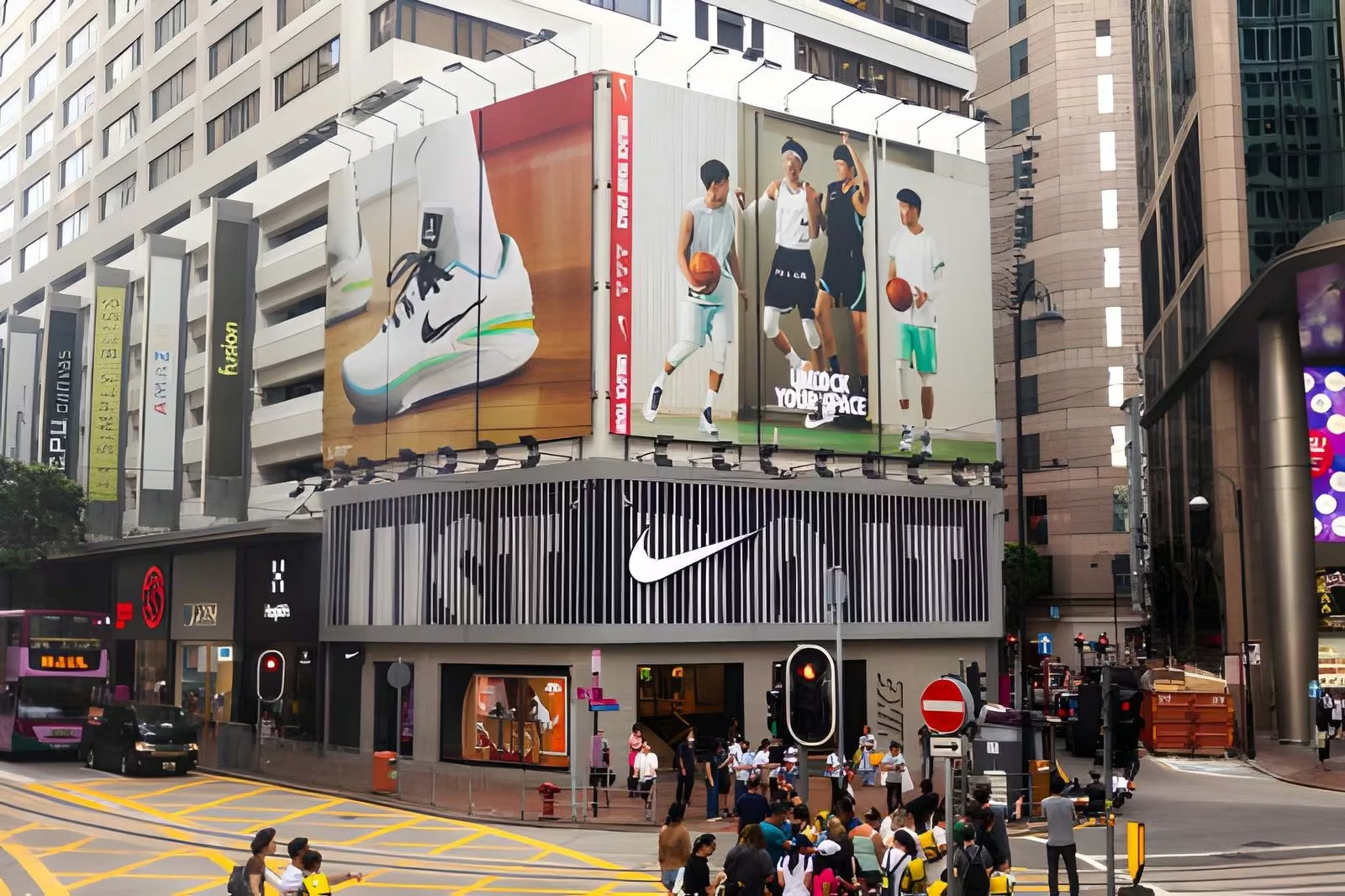
It would interest you to know that Nike uses its CRM data to decide where and how to build stores. For instance, they opened a Nike Live location in Williamsburg, New York specifically because they noticed high training-app engagement in the area without a nearby physical touchpoint, then tailored the merchandise to local shoppers.
Similarly, at its House of Innovation flagship in New York, the Nike App unlocks geo-fenced personalized content on arrival, in-app “Instant Checkout,” and bookable 1:1 styling sessions reserved for members.
For Nike, the digital relationship follows the customer into the store, and they’re bent on blurring the lines between digital and in-store experiences.
5. Personalization at Scale Through Data Unification
The truth is that the personalisation magic only works if all that data talks to each other. That is why Nike acquired Datalogue, to integrate data from “its app ecosystem, supply chain, and enterprise data” into one standardized platform that turns “raw data into actionable insights in real-time.
So with Datalogue, Nike now unifies its data which helps them in making insights-oriented decisions.
The Results and the Reversal
Nike’s CRM-and-DTC engine delivered real, measurable growth. NIKE Direct revenue roughly doubled from $11.8 billion in FY2019 to $21.3 billion in FY2023, and digital’s share of the business nearly tripled from 10% to 26% over the same period.
However, the story does not end with a victory lap, which is precisely what makes it instructive. Beginning in FY2024, Nike posted its first digital sales decline in nine years; direct revenue fell to $18.8 billion in FY2025 and $17.7 billion in FY2026 as the company re-engaged wholesale partners like Amazon and Foot Locker.
While CRM and direct-to-consumer (DTC) relationships remain core to the brand, Nike has learned that ‘going direct’ is a balancing act, not a one-way bet.
Conclusions: What Your Business Can Learn From Nike's CRM Strategy
There is a lot the average business can borrow from Nike’s playbook and you do not need a billion-dollar budget to do it.
First, make membership your data engine, not just a discount club. Nike’s free signup exists to turn anonymous shoppers into known, trackable relationships. A simple free account or loyalty program can do the same for you, converting one-time buyers into a data asset you can actually market to.
Second, personalize on engagement, not just purchases. Nike rewards poll votes, workout logs, and content views, not only checkouts. Track email opens, site browsing, and app usage so you can segment and personalize the way Nike does.
Third, buy focused tools instead of chasing one perfect all-in-one system. Nike stacked narrow, purpose-built capabilities. You can start small with an affordable CRM that centralizes contacts and automates personalized follow-up — tools like Pipedrive, folk, or GoHighLevel make this accessible for small businesses.
The takeaway is simple: own your customer relationship and the data behind it, and put that data to work. That is the swoosh’s real secret.
Frequently Asked Questions
Nike relies largely on a proprietary, in-house customer data platform with its own AI/ML models, according to its VP of Marketing Data. Specific business units have used Salesforce Marketing Cloud for example, Nike Team Football in France, but there is no single publicly confirmed company-wide CRM vendor.
Reported figures vary by definition and date, but Nike cited 160 million active members in late 2021 and reported that its four apps reached 500 million users in a single quarter in 2023
It is the direct-to-consumer strategy Nike announced in 2017 to serve customers “faster and more personally, at scale, led by digital,” shifting focus from wholesale toward Nike’s own channels and apps
Nike collects first-party data through its membership program and apps (purchases, run and workout activity, and in-app engagement) and uses it to personalize offers, recommend products and workouts, target exclusive-access invitations, and even decide where to open stores
It drove strong growth through 2023, but Nike’s digital and direct revenue declined in FY2024–FY2026, leading the company to rebalance back toward wholesale partners while keeping membership and personalization central decide where to open stores