How does a retailer convince millions of customers to pay before they are allowed to shop? That question sits at the centre of Costco’s customer relationship strategy.
Most retailers use discounts, advertising, loyalty points, and personalized emails to persuade customers to return. Costco begins the relationship differently.
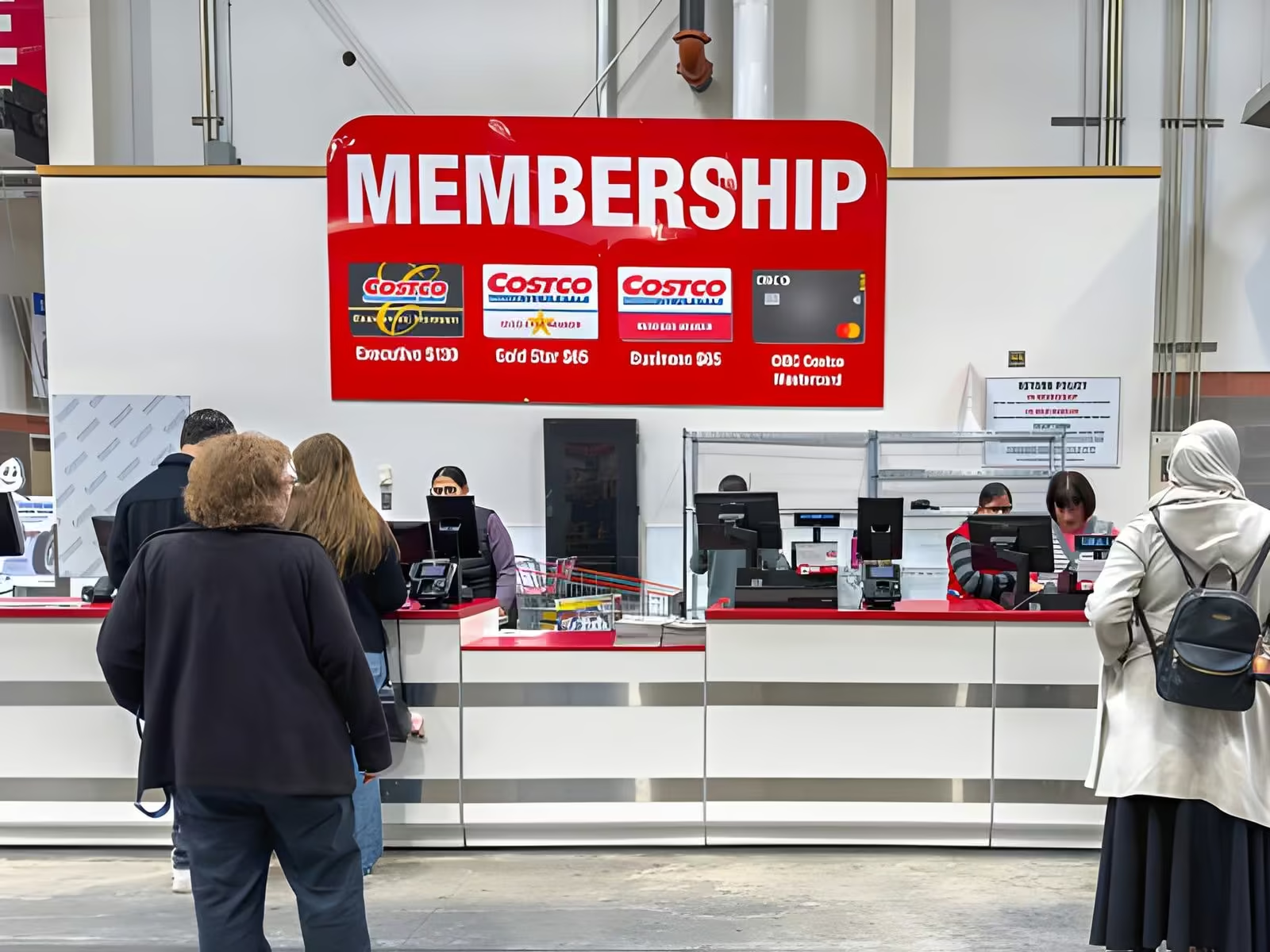
Customers pay an annual membership fee for access to the company’s warehouses, ecommerce websites, lower prices, private label products, services, and selected benefits.
The membership card identifies the customer whenever they shop. It also allows Costco to connect purchases, renewal activity, rewards, online accounts, household members, and service usage to an individual membership.
By the end of its 2025 financial year, Costco had 81 million paid memberships and 145.2 million cardholders worldwide. The company also reported a renewal rate of 92.3 percent in the United States and Canada and 89.8 percent worldwide.
These numbers reveal something important.
Costco may not communicate with customers as aggressively as many online retailers, but it has built one of the strongest membership relationships in modern retail.
The company does not need to identify an anonymous shopper after a purchase. Membership gives Costco a known customer relationship before the shopping journey begins.
Costco joins companies such as Walmart, Amazon, Nike, and Starbucks in demonstrating that CRM is much broader than installing sales software. You can explore more examples in our collection of CRM case studies from the world’s biggest brands.
This Costco CRM case study examines the company’s membership system, Executive rewards, digital shopping tools, customer service policies, and the lessons other businesses can take from its approach.
“Keep costs down and pass the savings on to our members.”
– Costco’s Operating Philosophy
History of Costco: Timeline and Important CRM Milestones
Price Club opened its first location inside a converted airplane hangar in San Diego.
Jim Sinegal and Jeff Brotman opened the first Costco warehouse in Seattle.
Costco and Price Club merged.
Costco introduced Kirkland Signature.
The company resumed operating under the Costco name.
Costco increased its annual membership fees in the United States and Canada from September 1, 2024.
Costco added exclusive shopping hours for Executive members in the United States.
The Costco application now allows members to access a digital membership card, check local warehouse inventory and pricing, manage membership information, view receipts, refill prescriptions, monitor Executive rewards, and renew their membership.
Before you proceed, you can get instant, no-obligation CRM quotes. Just answer a few quick questions and we’ll match you with top providers tailored to your business.
What CRM Does Costco Use?
Costco does not publicly identify one companywide CRM platform that controls every customer relationship across its warehouses, ecommerce operations, travel services, pharmacy, optical departments, delivery partners, and international markets.
Its annual report refers to revenue processing across multiple information technology systems rather than naming one central CRM platform.
Costco’s CRM should therefore be understood as a customer relationship ecosystem.
The ecosystem includes membership records, warehouse transactions, ecommerce accounts, purchase histories, the Costco application, Executive rewards, email preferences, Costco Travel, Same Day Delivery, the Costco Anywhere Visa Card, and customer service operations.
5 Ways Costco Uses Customer Relationship Management
1. Paid Membership Turns Shoppers Into Identifiable Customers
Traditional retailers allow customers to enter, purchase products, and leave without identifying themselves. Costco operates differently.
A customer generally needs an active membership to shop through a Costco warehouse or use selected member services. That membership creates an identifiable relationship before the first purchase takes place.
Costco knows who joined, which membership level they selected, when the membership expires, whether it was renewed, and which household card is connected to the account.
Once the member begins purchasing, Costco can connect eligible transactions to the membership number. The difference is significant.
A conventional retailer may know that someone purchased groceries and a television.
Costco can connect those transactions to a specific membership account, show receipts inside the application, estimate an Executive reward, and use the purchase record when assisting with a return.
Membership therefore performs several CRM functions at once. It identifies the customer.
It creates recurring revenue.
It supports transaction histories. It provides a reason to return.
It gives Costco a measurable retention event through annual renewal. It also creates a clear value exchange.
Customers pay for access because they expect the savings, products, services, and experience to be worth more than the membership fee.
Costco benefits because the relationship is formal, measurable, and renewable.
The approach is more direct than the free memberships used by many brands. Nike, for example, provides free accounts to attract more customers into its ecosystem. Our Nike CRM case study explains how that membership supports customer identification and personalization.
Costco places the value test at the beginning.
2. Executive Membership Segments Costco’s Most Valuable Customers
Costco does not treat every membership in exactly the same way.
Gold Star membership provides access to Costco warehouses and ecommerce services.
Executive membership costs more but includes an annual 2 percent reward on qualifying purchases and additional benefits connected to selected Costco services.
This creates a natural customer segment.
A member who spends enough to justify the additional fee may upgrade to Executive.
Costco can then identify customers who are likely to shop more frequently, use more services, and generate higher annual spending.
At the end of 2025, Costco had 38.7 million Executive members. These members represented approximately
73.6 percent of worldwide net sales.
That does not mean every Executive member is equally valuable.
However, the tier gives Costco a simple way to separate highly engaged members from customers who use the warehouse less frequently.
The reward also changes customer behaviour.
A customer who expects to receive 2 percent back may prefer to concentrate more purchases with Costco instead of dividing their spending among several retailers.
Someone purchasing groceries may begin using Costco for fuel, travel, appliances, optical services, or insurance related services.
The more value the customer receives, the easier it becomes to justify renewing the Executive membership.
Costco has continued adding tier specific benefits.
Executive members in the United States received exclusive shopping hours and a monthly Same Day Delivery credit on eligible purchases during 2025.
This demonstrates an important CRM principle. A premium tier should not merely cost more.
It should make the customer feel that the additional payment produces additional value.
Companies building paid communities can explore the platforms in our guide to the best CRM for membership organisations.
3. Costco Treats Renewal as Its Most Important Retention Metric
Many retailers measure loyalty through repeat purchases.
Costco can also measure whether the customer actively chooses to continue the relationship. Every annual renewal answers a simple question.
Did the member receive enough value to pay again?
Costco’s renewal rate was 92.3 percent in the United States and Canada and 89.8 percent worldwide at the end of financial year 2025.
A renewal rate at that level suggests that the majority of members consider the relationship valuable enough to continue.
Costco supports renewal through several mechanisms. Members receive access to low prices.
Executive members can earn annual rewards.
Customers can renew through the application or website. Auto renewal can reduce accidental membership expiration.
Purchase histories and rewards balances make the value of membership easier to see.
The company’s satisfaction guarantee also reduces the perceived risk of joining because dissatisfied customers can request a refund of the membership fee.
Renewal data gives Costco an unusually clear lifecycle signal. The company can identify:
Members approaching expiration. Members who renew early.
Members who allow membership to expire. Members who upgrade.
Members who downgrade. Members who cancel.
Members whose spending may not justify an Executive membership. These events can inform customer communication and service.
For example, a member approaching renewal may need to see the amount saved, rewards earned, services used, or new benefits available.
A member who has not shopped recently may require a different message from one who visits every week.
Costco reported that memberships acquired through online channels and digital promotions renewed at a slightly lower average rate than other memberships.
That insight creates a practical CRM question.
How can Costco help digitally acquired members experience the warehouse value strongly enough to renew?
This is what useful CRM reporting should do.
It should reveal where customers enter the journey, where they remain active, and where the relationship begins to weaken.
4. Same Day Delivery Adds Convenience Without Removing Membership
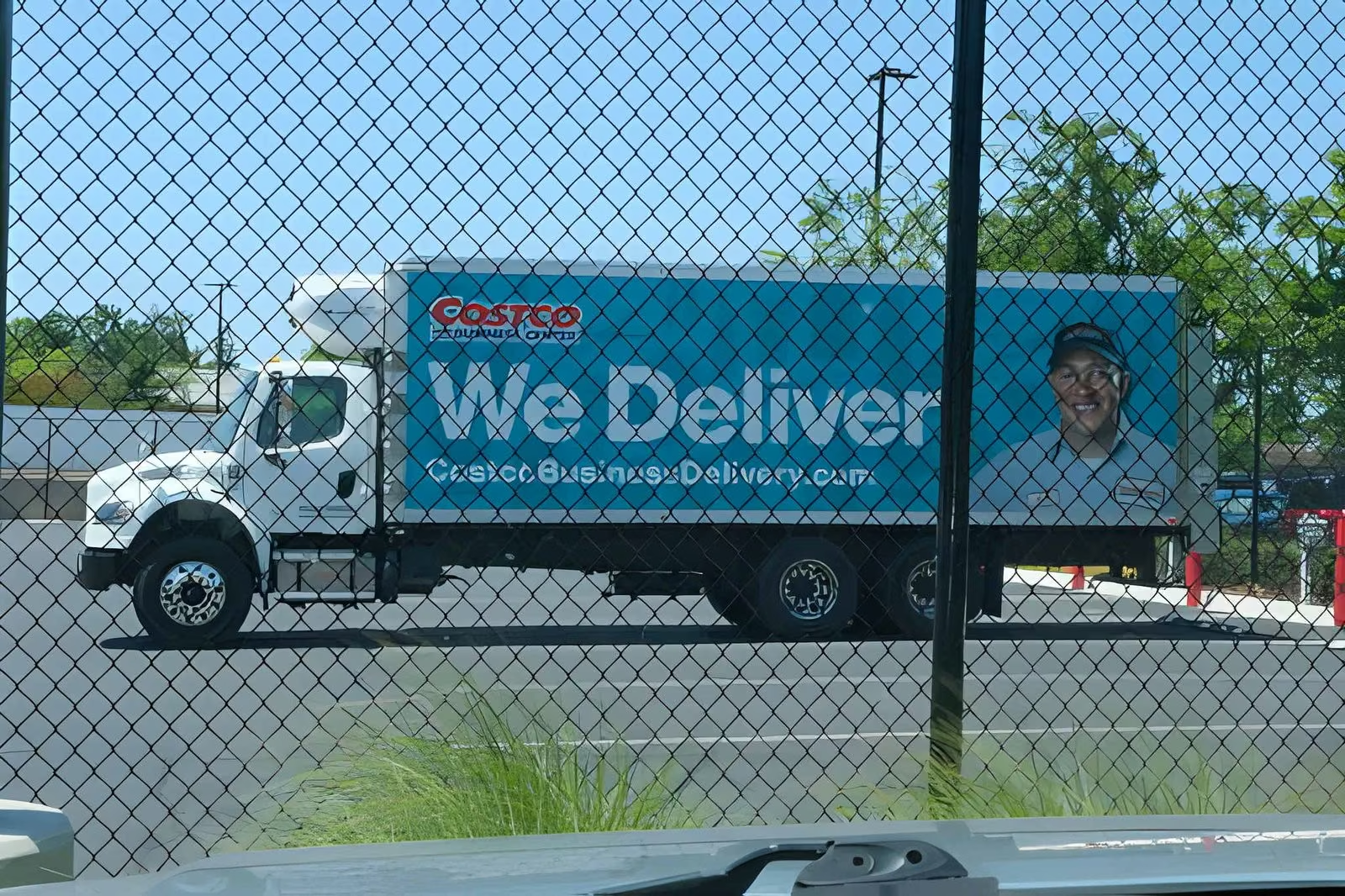
Warehouse shopping creates a strong customer experience, but it is not convenient for every situation. A customer may need groceries quickly.
They may not have transportation. They may have limited mobility.
They may not want to navigate a crowded warehouse.
Costco addresses this through Same Day Delivery powered by Instacart.
Members can order selected Costco products and receive delivery in as little as one hour, depending on availability and location. Costco’s Same Day platform requires a membership, preserving the relationship even when the customer does not enter a warehouse.
This is an important CRM decision.
Costco could have treated delivery as a separate transaction. Instead, it connects the service to the membership ecosystem. The customer signs in through Costco.
Membership status determines access to selected prices and benefits.
Executive members may receive a $10 monthly credit for an eligible order of at least $150 when the required accounts are connected.
Delivery gives Costco another way to serve the same member.
It also creates additional information about digital shopping behaviour, delivery locations, frequently purchased products, and order timing.
However, Costco is transparent that Same Day item prices may be higher than warehouse prices because they include service and delivery related costs.
That transparency matters.
Customers join Costco because they expect value.
A convenient channel should not quietly undermine the trust behind the membership.
5. The Costco Visa Card Extends the Relationship Beyond the Warehouse
The Costco Anywhere Visa Card by Citi gives the company another customer relationship channel.
The card can be used wherever Visa is accepted, allowing eligible customers to earn Costco cash rewards from purchases made outside Costco.
Current United States benefits include rewards on eligible fuel, electric vehicle charging, restaurants, travel, Costco purchases, Costco.com purchases, and other spending.
The card also functions as a membership card.
This combines identification, payment, and rewards in one product.
For the customer, the benefit is convenience and additional cash rewards.
For Costco, the card keeps the membership relevant during everyday spending.
A customer does not need to be inside a Costco warehouse for the relationship to continue.
A restaurant payment, fuel purchase, or travel transaction can contribute to an annual Costco reward. The annual reward certificate also creates a reason to return.
Customers receive the reward through their Citi statement or account and can redeem it through eligible Costco channels.
Costco members can also combine Executive rewards with Costco Visa rewards, allowing eligible spending to generate value through both programs.
This strengthens the feeling that remaining inside the Costco ecosystem produces greater benefits.
The strategy resembles how Starbucks connects its payment tools and loyalty program to repeat purchases. Our Starbucks CRM strategy explains how payments, rewards, and mobile convenience can reinforce customer retention.
The broader lesson is that a payment product can become a relationship tool.
It should not merely process transactions.
It should make the customer’s preferred behaviour more rewarding.
Results of Costco’s CRM Strategy
• 145.2 Million Cardholders
Costco reported 145.2 million total cardholders at the end of financial year 2025.
This included paid members and household cardholders connected to those memberships. The total increased from 136.8 million in 2024 and 127.9 million in 2023.
This gives Costco an enormous identified customer community.
The company can connect eligible purchases, returns, rewards, online accounts, and membership activity to individual relationships instead of depending entirely on anonymous transaction data.
• 81 Million Paid Memberships
Costco had 81 million paid memberships at the end of 2025, compared with 76.2 million in 2024.
Gold Star memberships represented 68.3 million of the total, while Business memberships and their affiliates represented 12.7 million.
Paid membership growth is particularly valuable because each new membership can produce annual fee income and future merchandise sales.
38.7 Million Executive Members
Executive membership reached 38.7 million members in 2025.
Executive members represented approximately 73.6 percent of worldwide net sales.
This result demonstrates how effectively Costco has moved engaged customers into its premium membership tier.
The Executive program does not merely produce a higher membership fee.
It identifies a group of customers responsible for most of the company’s sales.
92.3 Percent Renewal Rate in the United States and Canada
Costco’s membership renewal rate reached 92.3 percent in the United States and Canada and 89.8 percent worldwide at the end of 2025.
Renewal is one of the clearest indicators of customer retention.
Members are not simply returning because Costco is nearby. They are making an active decision to pay for another year of access.
$5.3 Billion in Membership Fee Revenue
Costco generated $5.323 billion in membership fee revenue during financial year 2025, an increase of 10 percent from $4.828 billion in 2024.
The increase was driven by new memberships and the membership fee increase introduced in the United States and Canada.
Costco recognizes the revenue over the membership period rather than treating the complete fee as revenue immediately.
This recurring income gives the company a more predictable revenue stream than merchandise sales alone.
What Businesses Can Learn From Costco’s CRM Strategy
Costco’s scale is unusual, but its customer relationship principles can be applied by much smaller businesses.
1. Build the Relationship Around Clear Value
Customers pay Costco because they expect the membership to save them money or improve their shopping experience.
The value proposition is easy to understand. Pay an annual fee.
Receive access to products, prices, rewards, and services.
Your business should also be able to explain the customer relationship in simple language.
What does the customer receive in exchange for registering, subscribing, sharing information, or paying a membership fee?
The answer should be specific.
2. Make Retention Measurable
Costco can measure retention through annual renewal. Other businesses need their own clear retention events. These may include:
Subscription renewal. Repeat purchase.
Contract extension. Membership renewal. Application activity.
Service usage. Another booking. Referral.
Your CRM should make these events visible.
A customer who stops engaging should not disappear unnoticed.
3. Segment According to Customer Value
Executive membership helps Costco identify many of its most commercially valuable customers. Your business can segment customers using:
Annual spending. Purchase frequency. Profitability.
Product usage. Contract value. Referral activity. Engagement.
Support requirements.
Segmentation should not be used only to decide who receives discounts.
It should help the business determine who needs recognition, support, education, recovery, or a different offer.
4. Show Customers the Value They Have Received
The estimated Executive reward balance helps members understand what they have earned. Businesses should also make value visible.
A CRM can help show: Money saved.
Rewards earned. Projects completed. Time saved.
Results achieved.
Services used. Benefits remaining.
The more visible the value becomes, the easier it is for customers to justify renewal.
5. Connect Physical and Digital Interactions
Costco’s membership number connects warehouse purchases, online accounts, rewards, returns, and the mobile application.
A smaller retailer should apply the same principle.
A customer who buys through a physical shop should not become a stranger online. An online order should be visible to customer service.
A social media conversation should not disappear before a sales call. The CRM should preserve context as the customer changes channels.
Conclusions
The Costco CRM case study demonstrates that customer loyalty does not always require constant communication or complicated personalization.
The strongest lesson is simple.
Customers remain loyal when the value of the relationship is greater than its cost.
Your business may not need warehouses, bulk products, or an annual membership fee. However, it can still apply Costco’s core principles.
Identify the customer.
Provide clear value. Measure retention.
Recognize the most engaged people. Reduce purchasing risk.
Connect every channel.
Give customers a reason to renew the relationship.
That is the real engine behind Costco’s membership model.
Frequently Asked Questions
Costco does not publicly identify one unified CRM platform used across every part of its business.
Its customer relationship ecosystem includes membership databases, warehouse transaction systems, Costco.com, the Costco application, Executive rewards, Costco Travel, Same Day Delivery, customer service systems, and the Costco Anywhere Visa partnership.
There is no reliable public confirmation that Salesforce serves as Costco’s companywide customer relationship management platform.
Costco’s annual report refers to multiple information technology systems involved in areas such as revenue processing but does not identify a single global CRM.
Costco’s CRM strategy centres on paid membership, customer identification, annual renewal, premium member segmentation, rewards, omnichannel shopping, customer service, and a clear value proposition.
Small businesses can learn to provide clear membership value, identify customers consistently, measure retention, segment valuable customers, connect physical and digital channels, reduce customer risk, and make the benefits of the relationship visible.