
Japan is one of the world’s most attractive destinations for global expansion, with a highly educated labor force and global leadership in sectors including technology, automobile manufacturing, robotics, healthcare, and financial services. Thus, making it one of the most desirable locations for international development.
However, Japanese companies indicate that labor shortages are seriously affecting their operations, indicating a high demand for both native and foreign talent.
Although there are many opportunities in Japan, but recruiting employees as a foreign company can be complicated both legally and administratively. There are strict labor laws covering employment contracts, payroll, and termination procedures that must be followed by employers. Establishing a local subsidiary (or company) can take a lot of significant time and financial investment, which is where an Employer of Record (EOR) becomes a strategic solution.
This article explains how an EOR operates in Japan, as well as the country’s employment laws, payroll and tax requirements, required employee benefits, compliance risks, and why working with a seasoned EOR provider like Deel can help your company hire fast, stay compliant, and confidently enter the Japanese market.
What is an Employer of Record (EOR) in Japan?
An EOR is a third-party company that hires employees on behalf of an organization in Japan, thereby acting as the local legal employer without the organization having to set up a local legal entity (typically a company). In a regular EOR agreement, the client company maintains complete control over the employee’s daily tasks, responsibilities, and performance, but the EOR in Japan becomes the formal employer on paper.
This structure enables businesses to expand globally while staying compliant with local employment laws. Examples of EOR providers include Deel, Multiplier, Pebl, RemoFirst, and Oyster.
Key responsibilities of an EOR include:
• Payroll management
• Tax compliance
• Employee benefits
• Regulatory compliance
• Employment contracts
• Termination and off-boarding
Why Are Companies Hiring in Japan?
Corporations in Japan are actively hiring in an effort to address a severe national labor shortage caused by an aging population and a declining workforce. Companies are increasingly hiring foreign workers, accelerating digital transformation, and expanding their global operations in order to close talent gaps. Here are key factors Influencing hiring in Japan:
• Innovation and technological leadership
• Japan is the fourth-largest economy globally.
• A strategic gateway into the Asian market
• Strategic market access and economic stability
• Access to a highly skilled, educated and productive workforce
• Japan has a market that is too large to ignore
Japan Employment Laws Every Global Employer Must Understand
Japan has one of the strongest labor laws in the world, with a focus on work-life balance, employee stability, and unambiguous contractual obligations. Since the EOR guarantees compliance while the client oversees daily operations, global employers who use an EOR still need to be aware of these regulations. Errors may result in conflicts, penalties, or damage to the employer’s reputation.
The Labor Standards Act (労働基準法, Rōdō Kijun-hō): This is Japan’s main employment law. It came into effect in 1947 and sets legal requirements for wage structures, workplace safety, leave benefits, and working conditions. The Ministry of Health, Labor, and Welfare (MHLW) and local labor standards inspection offices strictly enforce the law. The following are important statutory requirements of the act:
• Working Hours: Eight hours per day and forty hours per week are the standard limits.
• Overtime (zangyo): A minimum pay premium of 125% of the regular hourly rate is required for overtime. The premium goes up to 150% if you work on official rest days.
• Paid Annual Leave: After six months of service, it begins at 10 days and increases to 20 days as tenure increases.
• Dismissal Protections: Legally, employers must give at least 30 days’ notice before terminating an employee or pay 30 days’ worth of average wages in lieu of notice.
• Employment Contracts: Employment contracts must be in writing. They must specify terms, pay, hours worked, and job descriptions. Although common, fixed-term contracts are regulated to avoid misuse.
Payroll and Tax Requirements in Japan
Strict adherence to national income tax laws, municipal resident taxes, and required social insurance contributions are necessary when managing payroll and taxes in Japan. In order to maintain compliance with Japanese labor and tax authorities, employers are heavily involved in their employees’ tax administration, necessitating accurate computations.
The following deductions and contributions are mandatory for Japanese payroll in order to ensure legal compliance:
• Income Tax (Withholding Tax): The progressive Pay-As-You-Earn (PAYE) withholding system is used in Japan. Depending on the employee’s taxable income, national income tax rates can vary from 5% to 45%.
• Social Insurance Contributions (Shakai Hoken): The employee and the employer split the contributions. Typically, each party pays half of the costs, which come to about 30% of the employee’s gross salary. It includes employment and worker’s accident insurance, health and nursing care insurance, and employees’ pension insurance (Kosei Nenkin).
• Workers Accident Compensation Insurance: This contribution is fully funded by the employer, in contrast to the majority of other social insurance programs. For workers who sustain illnesses, injuries, or accidents at work, workers’ accident compensation insurance covers their medical costs and benefits.
• Statutory Benefits and Leave Payments: To stay competitive, employers might have to pay for certain expenses while employees are on leave or offer extra benefits. Maternity leave, paid annual leave, and other protected leaves frequently entail ongoing social contributions.
• Payroll Process: Salaries are normally disbursed on a set date each month (such as the 25th). In many industries, bonuses in both summer and winter, are typical and expected. Employee social insurance contributions and income tax withholding are deducted, and the net pay is deposited straight into the worker’s bank account.
Employee Benefits and Mandatory Employer Obligations in Japan
In order to attract and retain talent in a competitive labor market like Japan, employers must adhere to these regulations (effectively through an EOR) while frequently offering competitive supplemental benefits. Comprehending these responsibilities is crucial for workforce planning, budgeting, and compliance. Here are the benefits and mandatory employer obligations in Japan that an EOR can help handle:
• Health & employees’ pension insurance
• Workers’ accident compensation insurance
• Paid annual leave
• Social Insurance (as detailed in Payroll section)
• Employment contracts and work rules
• Termination procedures
• Occupational health and safety
Key Compliance Risks When Hiring Employees in Japan
Strong protections are provided by Japan’s employee-friendly labor laws, but there are significant compliance risks for multinational corporations. Knowing these risks enables you to set reasonable expectations, and collaborate with your EOR partner in an efficient manner. Here are a few:
• Worker misclassification
• Failure to clearly communicate key employment conditions before work begins.
• Payroll and tax compliance errors
• Failure to enroll employees in mandatory social insurance
• Working hours and overtime violations
• Improper termination and dismissal
• Employee benefits and leave non-compliance
EOR vs. Legal Entity in Japan
Here is a comparison that highlights the key differences to help organizations choose between using an EOR and establishing a legal entity.
| Criteria | Employer of Record (EOR) | Legal Entity (Own Company Setup) |
| Setup Time | Fast hiring of employees within 1–14 days. | 3–6+ months (company registration, bank accounts, tax IDs, etc.) |
| Control Over Operations | Limited control (EOR is legal employer) | Full control over employees and operations |
| Compliance Responsibility | Handled entirely by EOR | Your company is fully responsible |
| Legal Risk | EOR ensures compliance | Company bears full legal responsibility |
| Cost Structure | Lower upfront cost; service-based pricing | High initial and ongoing operational costs |
| Legal Employer | The EOR | The company |
| Risk Exposure | Low risk | High risk exposure |
| Exit / Offboarding | Simple and low-cost | Complex, expensive, and lengthy |
| Best For | Small/medium teams, quick expansion, testing the market, and remote hiring. | Long-term presence, large-scale operations. |
When Should You Use an EOR in Japan?
EOR is especially useful for companies looking to enter or grow in the Japanese market with speed, flexibility, and lower risk. Here are key situations where using an EOR in Japan is the most effective approach:
• When you need to hire employees fast
• When you are testing the Japanese market
• When you have a small or medium team
• When you lack local HR/legal expertise or resources
• When you want to minimize risk and legal exposure
• When you do not want to establish a local entity
Top Employer of Record Providers in Japan
Choosing the right EOR provider is crucial for companies trying to effectively hire, manage, and grow teams in Japan. The ideal EOR should offer strong compliance support, seamless payroll management, local expertise, and reliable integrations with your existing business tools. Here are some of the leading EOR companies in Japan:
1. Deel
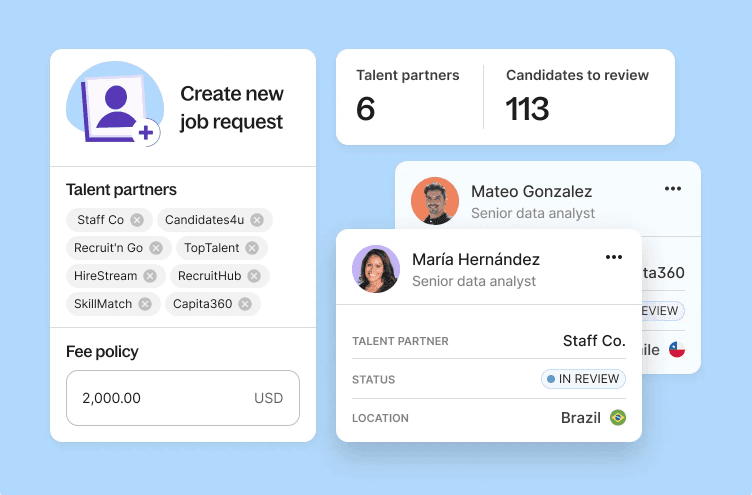
Deel is one of the most established EOR platforms globally, making it an excellent option for organizations seeking to hire quickly and legally in Japan. Deel also provides localized benefits, contract generation, and contractor management within a single dashboard.
One key advantage is that Deel often uses owned entities in certain markets, which can improve compliance and speed. Pricing typically starts at around $599 per employee/month.
• They offer end-to-end solutions including payroll, tax compliance, and benefits.
• Provides automation and integrations with tools like Workday, QuickBooks, and Slack.
• Best for companies that want a premium, all-in-one global hiring platform with strong automation, deep integrations, and enterprise-grade compliance across 150+ countries.
Start hiring in Japan with Deel
2. Multiplier
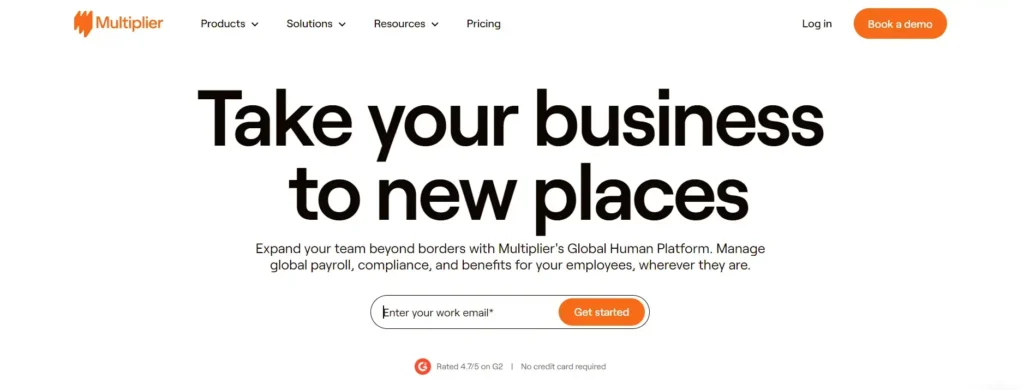
Multiplier is a fast-growing EOR provider known for its cost-effectiveness and strong compliance capabilities. It supports hiring in 150+ countries, including Japan. It is particularly appealing to startups and mid-sized businesses that want to hire internationally without paying premium enterprise-level costs. Despite the lower cost, it still delivers strong compliance coverage and essential HR tools.
• They generate compliant, localized employment contracts in minutes and onboard staff within 24–72 hours.
• Responsive customer support and region-specific expertise. Not sure if Multiplier or Deel is the better fit for you? Compare pricing, features, and ideal use cases in our Multiplier vs Deel comparison post.
• Best for cost-conscious companies and startups looking for a reliable, affordable EOR solution.
Get started with Multiplier today
3. Pebl
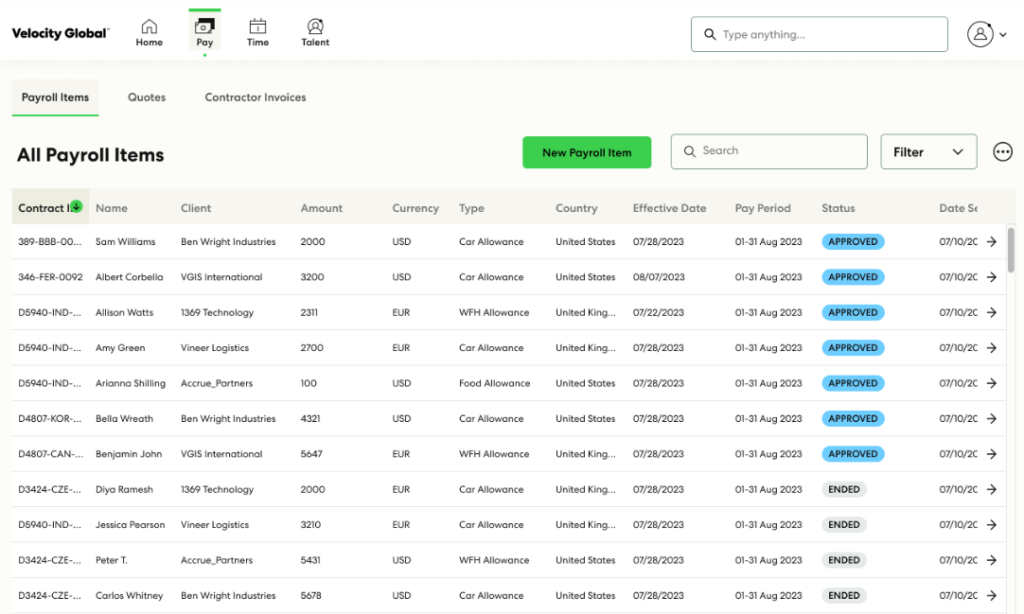
Pebl, formerly known as Velocity Global, is one of the leading EOR providers in Japan. It is designed for rapid international hiring, offering instant quotes and onboarding in less than 24 hours. Pebl stands out for its ability to support large-scale international expansion.
They maintain a massive network to manage payroll, benefits, and local legal compliance for over 1,500 clients. Other features include:
• Presence in 185+ countries with strong local expertise.
• Provides a central platform for onboarding, managing, and paying international talent.
• Best for large or scaling companies that need white-glove support, consulting, and customized global expansion solutions. Get started with Pebl.
Start scaling with Velocity Global
4. RemoFirst
RemoFirst aims to simplify global team hiring. They break down global penetration barriers and create new opportunities by connecting organizations with elite talent worldwide. With a focus on people, excellence, and delivery, they enable companies to expand on their own terms without the hassles of managing compliance.
RemoFirst is one of the most affordable EOR providers; its pricing starts at approximately $199 per employee/month, making it a strong option for startups and small businesses looking to minimize costs while still maintaining compliance.
It’s primary features include:
• Affordable pricing compared to many competitors.
• Access to global health coverage (medical, dental, vision).
• Best for budget-conscious startups and SMEs that want the lowest-cost EOR option with solid core compliance features.
Get started with Remofirst
5. Oyster
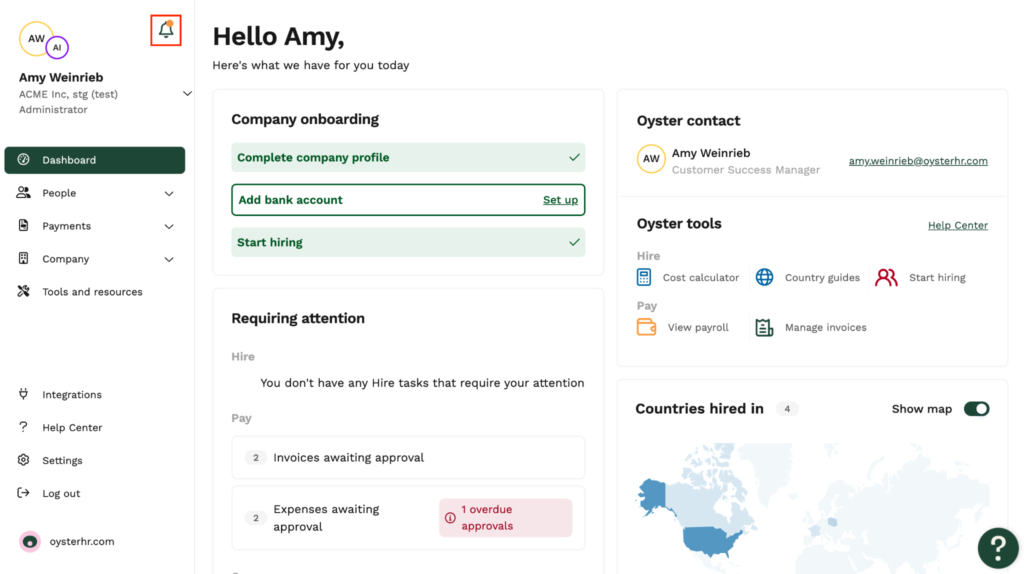
Oyster is more than a hiring platform; it’s your strategic partner for global expansion. Their technology, backed by expert support, allows you to focus on your team while they manage the intricacies of payroll, benefits, and compliance. It enables businesses to navigate global hiring with peace of mind. Some of its features include:
• Enables firms to manage both contractors and full-time employees on the same platform
• Manages international payroll in local currencies including health insurance, and retirement plans.
• Best for Mid-sized to enterprise teams focused on employee experience, long-term retention, and structured global workforce management.
Start your EOR journey with Oyster
Hence, integrations can make or break your hiring workflow. Before signing with any EOR, verify how well it connects with your CRM using our free EOR – CRM compatibility checker.
Quick Comparison of Top EOR Providers in Japan
| Provider | Starting Price | Key Strength | Best For |
| Deel | $599/per employee/month | Scalability and Integrations | Global startups |
| Multiplier | $400/per employee/month | Affordability and Simplicity | Cost-conscious teams |
| Pebl | $599/per employee/month | Global expansion | Large companies |
| RemoFirst | $199/per employee/month | Lowest pricing | Startups & SMEs |
| Oyster | $699/per employee/month | Remote-first teams | Distributed teams |
Final Thoughts
Employing top-tier employees in Japan through an employer of record platform gives multinational corporations a strong, low-risk way to access one of the most talented, committed, and creative talent pools in the world. In a time of tight labor markets and fierce international competition for talent, Japan’s economic strength, technological leadership, and strategic location in Asia make it a compelling business destination.
However, compliance is also a crucial factor for foreign employers due to the nation’s strict labor laws, mandatory social insurance requirements, payroll obligations, and robust employee protections. An EOR provides a practical solution and can serve as your link to long-term success as global commerce grows increasingly. For those who are prepared to act strategically, the opportunities are endless.
Are you ready to expand into Japan?
Then jump right in with any of the listed EOR providers listed in this article, and start the process of assembling a confident and compliant Japanese team.