
Among the many global talent hubs, India stands out as a leading destination for international hiring. India offers a powerful combination of expertise and cost efficiency due to its large pool of highly qualified workers, particularly in technology, customer service, finance, and engineering, highlighting the countries dynamic and diverse labor market.
Its large English-speaking workforce and well-established outsourcing ecosystem make it especially attractive to companies looking to scale quickly and efficiently.
However, there are unique legal, administrative, and compliance issues associated with recruiting staff in India. This is where an Employer of Record (EOR) becomes essential. According to EY India, more than 72% of international companies that entered India in 2025 opted to use an EOR instead of establishing a local entity.
The reason was attributed to time, cost, and risk. This post will discuss how EOR services operate in India, the benefits of using them, the legal environment you need to understand, and top EOR providers in India to support your global expansion strategy.
But before we dive in, let’s look at the quick comparison of the top EOR providers in Inida.
Quick Comparison of Top EOR Providers in India
| Provider | Starting Price | Key Strength | Best For |
| Deel | $599/per employee/month | Scalability and Integrations | Global startups |
| Multiplier | $400/per employee/month | Affordability and Simplicity | Cost-conscious teams |
| Pebl | $599/per employee/month | Global expansion | Large companies |
| RemoFirst | $199/per employee/month | Lowest pricing | Startups & SMEs |
| Oyster | $699/per employee/month | Remote-first team | Distributed teams |
What is an Employer of Record (EOR)?
An EOR is a third-party company that hires employees on behalf of an organization in other countries, thereby acting as the local legal employer without the organization setting up a local legal entity (typically a Private Limited Company). In a regular EOR agreement, the client company maintains complete control over the employee’s daily tasks, responsibilities, and performance, but the EOR becomes the formal employer on paper.
This structure enables businesses to expand globally while staying compliant with local employment laws. Examples of EOR providers are Deel, Multiplier, Velocity Global, Remofirst, and Oyster.
Key responsibilities of an EOR include:
Why Hire Employees in India?
India has become one of the most attractive destinations for global hiring, and for good reason. Companies from a wide range of sectors are increasingly looking to India to develop high-performing, economical teams that can support global expansion. Hiring workers in India provides access to a large, youthful talent pool with strong English-speaking skills and high technical proficiency (STEM) at affordable wages. It also facilitates 24/7 business operations through time zone advantages, boosts competitiveness, and provides flexibility across various corporate cultures.
Hiring in India is far less expensive than in the US, UK, or Western Europe. Top talent is available to companies for a fraction of the price, which enables them to maximize budgets while maintaining high output quality and productivity. India is experiencing a sharp increase in digital skills and remote work capabilities due to rising internet coverage and government support for digital initiatives. This facilitates the development and effective management of remote teams by multinational corporations.
Challenges of Hiring in India Without an EOR
Hiring talented employees in India without an EOR presents significant challenges for foreign companies, particularly those seeking speed, scalability, and low risk. One of the primary challenges is navigating the country’s complex and ever-evolving labor laws, which vary from state to state, necessitating strict adherence to statutory benefits, employment regulations, and tax obligations. Hence, failure to comply with Provident Fund (PF), Employee State Insurance (ESI), and Professional Tax can lead to severe penalties.
Companies encounter operational and cultural difficulties in addition to compliance and administrative challenges, which can affect workforce management and overall business performance. Attracting and keeping talent requires an understanding of local workplace expectations, employee benefits, and communication styles, but this can be challenging without regional expertise. These difficulties make it challenging for companies to expand effectively and compete successfully in the Indian market.
How an Employer of Record in India Solves These Challenges?
An EOR provides a streamlined solution for companies looking to hire in India without navigating the complexities of establishing a local entity. As the company’s legal employer, the EOR is in charge of processing payroll, filing taxes, adhering to local labor laws, and providing statutory benefits. This significantly reduces the risk of non-compliance and financial penalties by removing the need for companies to manage administrative burdens internally or interpret complex regulations.
Additionally, an EOR facilitates quicker market entry, enabling businesses to start operations without the delays associated with legal setup and company registration. Companies gain access to local HR expertise, ensuring that employment contracts, benefits packages, and workplace practices align with cultural expectations and legal requirements. This reduces the chance of disputes while increasing employee retention and satisfaction. This provides a low-risk route for global expansion, enabling companies to concentrate on core operations rather than complicated regulations.
Key Employment Laws in India
Labor laws are intended to uphold the rights of workers, guarantee equity in the workplace, and promote positive employer-employee relations. India’s labor laws are governed by a combination of central and state-specific regulations that cover wages, working conditions, social security, and employee rights.
The government combined 29 central labor laws into four main labor codes. This change seeks to streamline compliance, eliminate redundant regulations, and facilitate commerce within the country.
India key labor codes:
Key Compliance and Legal Requirements Handled by EOR in India
An EOR plays a critical role in managing compliance and legal obligations for companies hiring in India. When collaborating with an EOR in India, the registered local entity of the EOR acts as the legal employer. This ensures adherence to India’s employment framework while protecting your organization from direct liability by transferring full responsibility for compliance to the EOR.
Key compliance areas handled by an EOR in India include:
• Employment contracts and onboarding: The EOR will draft and sign employment contracts that adhere to Indian labor laws.
• Payroll processing and income tax withholding: The EOR will process payments in Indian Rupees (INR) with accurate breakdowns of earnings, making sure local tax laws are followed, and calculating and withholding monthly Tax Deducted at Source (TDS).
• Statutory social security contributions: Statutory contributions such as Employee State Insurance (ESI) (0.75%), Provident Fund (PF) (typically 12%), and other insurance contributions will be remitted.
• Benefits Administration: providing legally required benefits like health insurance, gratuity, and paid maternity leave (up to 26 weeks).
• Termination, offboarding, and dispute resolution: To prevent legal disputes, the EOR will handle termination procedures, including notice periods, paperwork, and statutory severance payments.
• Risk Mitigation: The EOR will assume responsibility for legal matters pertaining to employment, like tax penalties or unlawful dismissal.
Benefits of Using an EOR in India
In India, using an EOR facilitates market entry by enabling foreign businesses to hire local talent in a matter of days without establishing a local entity. EORs greatly lower legal risks and administrative burdens by managing complex compliance with Indian labor laws, payroll, taxes (EPF, ESI), and benefits. Key benefits of using an EOR in India include:
• Quick market entry
• Payroll and benefits are simplified
• Efficient onboarding
• Eliminates the high setup costs and and monthly maintenance fees of establishing a legal entity
• Provides specilized knowledge of Indian employment practices including managing leaves, benefits, and local contract customs
EOR vs Legal Entity in India
Should you hire employees in India through an EOR, or set up your own entity? The answer to this question depends on your company’s resources, size, and plans to scale. Establishing a legal entity from scratch involves registering with local authorities, opening a local bank account, and consulting with local experts to ensure compliance with labor and tax laws. On the other hand, with an EOR, you don’t have to worry about non-compliance because an EOR will handle all the legal requirements and serve as your employees’ legal employer.
Each approach comes with its own advantages, costs, and operational implications.
Here is a comparison that highlights the key differences to help organizations choose the most suitable option.
| Criteria | Employer of Record (EOR) | Legal Entity (Own Company Setup) |
| Setup Time | Fast hiring of employees within 1–14 days. | Setup is slow and can take up to 2–6+ months |
| Control Over Operations | Limited control (EOR is legal employer) | Full control over employees and operations |
| Compliance Responsibility | Handled entirely by EOR | Fully managed by the company |
| Legal Risk | EOR ensures compliance | Company bears full legal responsibility |
| Cost Structure | Lower upfront cost; service-based pricing | High initial and ongoing operational costs |
| Legal Employer | The EOR | The company |
| Risk Exposure | Low risk | High risk exposure |
| Best For | Small/medium teams, quick expansion, testing market, remote hiring. | Long-term presence, large-scale operations. |
When Should You Use an EOR in India?
Expanding into India presents significant opportunities, but it also comes with regulatory, operational, and compliance complexities. EOR is especially useful for companies looking to enter or grow in the Indian market with speed, flexibility, and lower risk. Here are key situations where using an EOR is the most effective approach:
• When you need to hire employees fast
• When you are testing the Indian market
• When you have a small/medium team
• When you lack HR/legal expertise or resources
• When you want to minimize risk and legal exposure
• When you do not want to establish a local entity
Top Employer of Record Providers in India
Choosing the right EOR provider is crucial for companies trying to effectively hire, manage, and grow teams in India. The ideal EOR should offer strong compliance support, seamless payroll management, local expertise, and reliable integrations with your existing business tools. Here are some of the leading EOR companies in India:
1. Deel
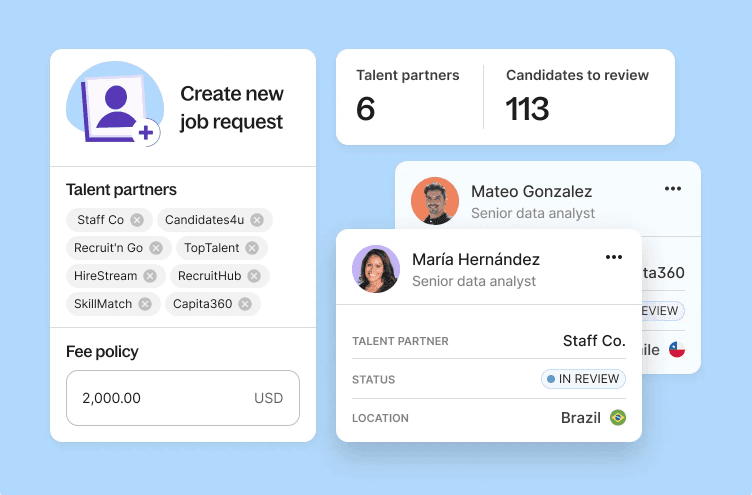
Deel is one of the most established EOR platforms globally, making it an excellent option for organizations seeking to hire quickly and legally in India. Deel provides a robust infrastructure for managing foreign workers, handling everything from localized contracts and payroll to tax compliance and statutory benefits, with coverage in over 150 countries.
• They offer end-to-end solutions including payroll, tax compliance, and benefits
• Provides automation and integrations with tools like Workday, QuickBooks, and Slack.
• Best for Companies that want a premium, all-in-one global hiring platform with strong automation, deep integrations, and enterprise-grade compliance across 150+ countries
Start hiring in India with Deel
2. Multiplier
Multiplier is a fast-growing EOR provider known for its cost-effectiveness and commitment to developing markets like India. Startups and mid-sized businesses that wish to hire abroad without paying a premium enterprise cost will find it appealing. Despite the lower cost, it still delivers strong compliance coverage and essential HR tools.
• They generate compliant, localized employment contracts in minutes and onboard staff within 24-72 hours.
• Responsive customer support and region-specific expertise. Not sure if Multiplier or Deel is the better fit for you? Compare pricing, features, and ideal use cases in our Multiplier vs Deel comparison post.
• Best for Startups and growing businesses looking for cost-effective, fast onboarding, and strong expertise in Asia-Pacific (including India).
Get started with Multiplier today
3. Velocity Global
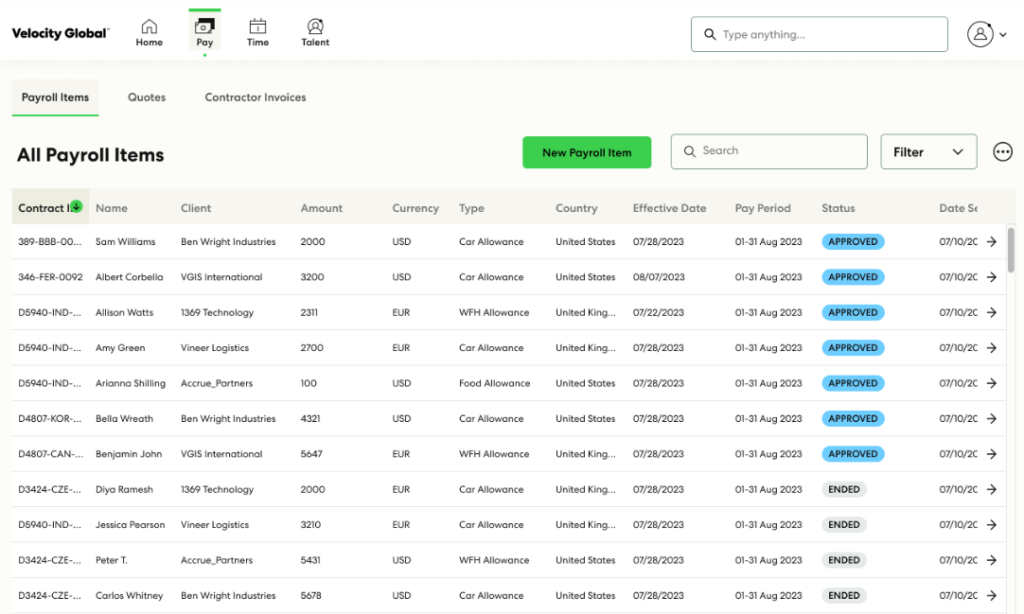
Velocity Global, a leading EOR provider, rebranded to Pebl in September 2025, is designed for rapid international hiring, offering instant quotes and onboarding in under 24 hours. They maintain a massive network to manage payroll, benefits, and local legal compliance for over 1,500 clients. Other features include:
• Presence in 185+ countries with strong local expertise.
• Focus on compliance, risk management, and tailored HR solutions.
• Provides a central platform for onboarding, managing, and paying international talent.
• Best for large or scaling companies that need white-glove support, consulting, and customized global expansion solutions.
Start scaling with Velocity Global
4. RemoFirst
RemoFirst’s goal is to simplify global team hiring. They break down barriers and create new opportunities by connecting organizations with elite talent worldwide. With a focus on people, excellence, and delivery, they enable companies to expand on their own terms without the hassles of compliance. Other features include:
• Affordable pricing compared to many competitors.
• Supports hiring in 180+ countries, including India.
• Access to global health coverage (medical, dental, vision).
• Best for budget-conscious startups and SMEs that want the lowest-cost EOR option with solid core compliance features.
Get started with Remofirst
5. Oyster
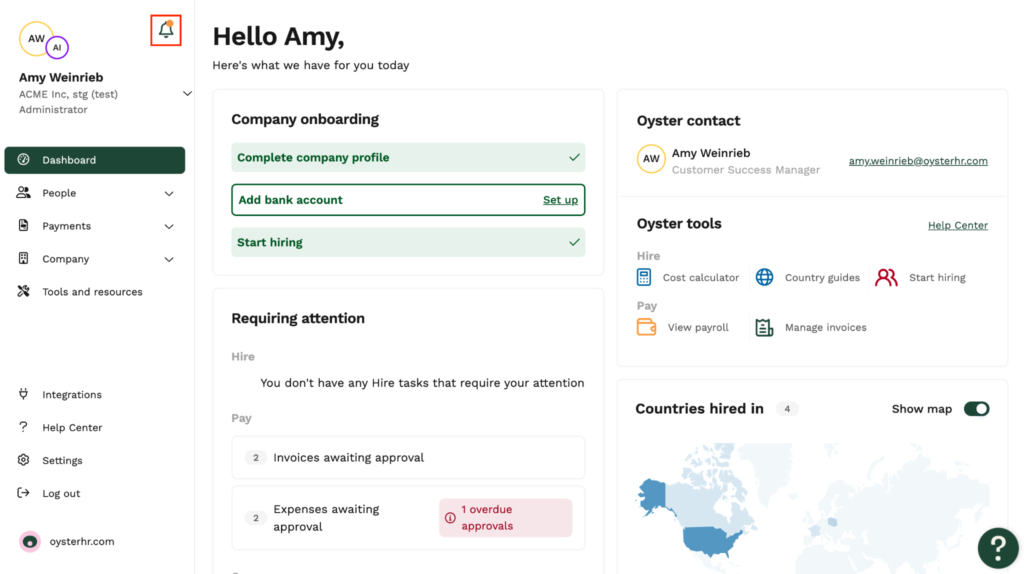
Oyster is more than a platform; it’s your strategic partner for global expansion. Their technology, backed by expert support, allows you to focus on your team while we manage the intricacies of payroll, benefits, and compliance. Navigating global hiring with peace of mind. Other features include:
• Enables firms to manage both contractors and full-time employees on the same platform
• Offers automated onboarding, payroll, and compliance tools
• Manages international payroll in local currencies including health insurance, and retirement plans
• Best for Mid-sized to enterprise teams focused on employee experience, long-term retention, and structured global workforce management.
Start your EOR journey with Oyster
Integrations can make or break your hiring workflow. Before signing with any EOR, verify how well it connects with your CRM using our free EOR – CRM compatibility checker.
Conclusion
India continues to be one of the most attractive talent markets in the world, offering a massive skilled workforce, significant cost advantages, and rapid innovation in technology, AI, and beyond. However, the complexities of entity setup, ever-evolving labor codes, state-specific regulations, and mandatory compliance requirements can slow down or even derail global hiring plans. An EOR provides a practical and efficient solution by handling employment, payroll, and regulatory responsibilities, allowing businesses to hire quickly, remain compliant, and scale with ease.
Hence, EOR services are ideal for companies testing the Indian market, hiring remotely, or needing to scale quickly without incurring the overhead of a permanent establishment. It offers you the speed of hiring in a matter of days rather than months, complete compliance reliability, predictable expenses, and the freedom to grow your Indian team without having to deal with the exhausting setup and maintenance of a local legal entity. Get started with the right EOR for your business now.
Frequently Asked Questions (FAQs)
How much does an EOR Costs in India?
The cost of using an Employer of Record (EOR) in India typically ranges from $150–$900 per employee per month, depending on the provider and level of service. Some EORs also charge 5%–15% of the employee’s salary instead of a fixed fee. In addition to the service fee, companies must budget for employee salaries, statutory contributions (such as Provident Fund and Employee State Insurance), and any optional benefits. Overall, India remains a cost-effective market, but the total cost depends on the employee’s role, benefits package, and EOR pricing model.
Is EOR legal in India?
Yes, using an EOR in India is completely legal. EOR providers operate within the framework of Indian labor laws by acting as the official employer on behalf of the client company. They handle employment contracts, payroll, tax compliance, and statutory benefits in accordance with local regulations. As long as the EOR provider is compliant with Indian laws, businesses can legally hire and manage employees through this model without setting up a local entity.
What is the best EOR for international hiring?
The best EOR for international hiring depends on your business needs, budget, and expansion goals. Leading providers like Deel, Multiplier, Velocity Global, RemoFirst, and Oyster are widely recognized for their global coverage, compliance capabilities, and ease of use. For example, Deel is known for its extensive integrations and automation, while Multiplier and RemoFirst are more cost-effective options. The right choice ultimately depends on factors such as scalability, required features, and compatibility with your existing systems.