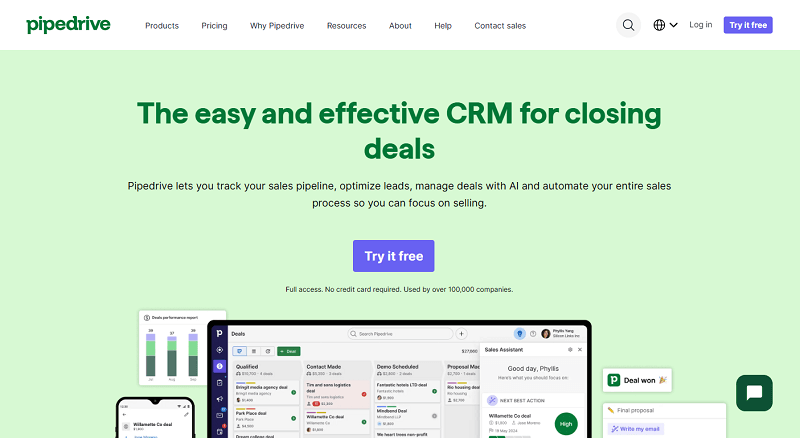
CRM software remains a valuable business tool because, over time, spreadsheets, messaging apps, and scattered emails become insufficient for effectively managing customer relationships. These inefficiencies not only slow down operations but can also lead to lost revenue and poor customer experiences.
Important leads get missed, follow-ups are delayed, and customer information becomes difficult to track. As a result, developing a custom CRM becomes a serious option. However, one critical question immediately arises: how much does it actually cost to build a CRM system?
The answer to that question depends on several factors, including features, complexity, development team, and integrations. Estimates vary, and without a clear breakdown, it might be hard to give a reasonable figure, or tell what might influence the cost, and how to plan your budget effectively.
This article provides a clear, practical, and honest breakdown of CRM development costs. You will learn the factors that influence pricing, the actual cost of different types of CRM systems, what hidden expenses to expect, and how to make cost-effective decisions regarding team choice.
Below is a quick overview of the average cost to build a CRM system:
| CRM Type | Estimated Cost |
|---|---|
| Basic CRM | $15,000 - $50,000 |
| Mid- level CRM | $50,000 - $70,000 |
| Advanced Enterprise CRM | $70,000 - $150,000 |
What Is a CRM System?
A CRM system is a software that acts as a centralized database designed to help businesses manage customer data, track interactions, automate sales processes, and improve customer relationships. It helps businesses to capture leads and manage sales activities and customer interactions across channels in one centralized place to improve efficiency and effectiveness.
Some of its functionalities include;
- Lead Tracking
- Contact Management
- Task Automation
- Sales Pipeline Management
- Customer Support Tracking
- Reporting and Analytics
- Email and WhatsApp Integration
Comparison of Custom CRM vs Ready-Made CRM
A custom CRM is a system that is built from scratch or heavily customized to meet a specific company’s unique workflows, sales processes, and data requirements. It features specialized integrations to improve efficiency, and it is typically developed by in-house teams or specialized developers.
Ready-made CRM systems or off-the-shelf software are pre-built, cloud-based software solutions designed for immediate use to manage customer data, sales pipelines, and marketing automation. They are subscription-based, ideal for small to medium-sized businesses needing rapid deployment. Typical examples include platforms like Salesforce, HubSpot, and Zoho CRM.
The table below provides a clear and honest comparison of both options across key cost and operational factors.
| Factor | Ready-Made CRM | Custom CRM |
|---|---|---|
| Monthly Scalability | Free plan available. Starting price $2 - $999 per user / month | No per-user monthly fee |
| Cost Scalability | Increases as you add more user s | Remains relatively stable regardless of user growth |
| Customization Level | Limited to platform capabilities | Fully customizable to your business workflows |
| Ownership | You do not own the software | You fully own the software |
| Maintenace Cost | Included in subcription | 15% - 25% of development cost annually |
| Development Time | Immediate to a few days | 1 - 15 months depending on complexity |
| Long - Term Cost Efficiency | More expensive as team grows | More cost - effective for large or growing teams |
| Control and Flexibility | Limited control over fetures | Full control over features and system behaviour |
| Best For | Startup and small business with standard needs | Growing business and enterprise with specific requirements |
Average Cost to Develop a Custom CRM in 2026
The exact cost of developing a CRM can be challenging to determine because there is no one-size-fits-all pricing. Hence, it is possible to provide ranges that are realistic based on complexity and scope of the system. The estimates below provide a developmental cost that reflects standard rates and getting a professional team.
| CRM Features | Duration | Description | Cost Range | Best For |
|---|---|---|---|---|
| Basic CRM | 2 - 4 Months | A minimal viable product with essential functions like contact management, basic lead tracking and dashboards | $15,000 - $ 50,000 | Suitable for smalll and startup teams |
| Mid-level CRM | 4 - 8 Months | Involves advanced sales pipeline features, automation, custom reporting and integrations with common tools (email, calendar). | $50,000 - $70,000 | Ideal for growing business with defined sales process . |
| Advance/ Enterprise CRM | 8 - 15 Months | A full featured system with automation, advanced analytics, role-based access, custom workflows, mobile access, and multiple third-party integrations | $70,000 -$150,000 | Best for larger organizations with complex requirements. |
These cost estimates are not fixed. Development costs can be higher or lower depending on the customization features, third-party integrations, design requirements, user roles, complexity, security, and compliance.
As mentioned earlier, the numbers above represent development costs, but there are additional ongoing costs to plan for:
- Hosting: $12.99–$500+ per month, depending on the hosting package
- Maintenance and updates: Usually 15%–25% of the development cost per year
- Future enhancements: Adding new features after launch will incur additional costs
How the Development Team Choice Affects CRM Cost
The cost estimates discussed above typically reflect pricing when hiring an established software development agency to manage the entire project from planning and design to development, testing, and deployment.
For example, working with a specialized agency or similar full-service development firms usually involves higher project costs because you are paying for:
- A structured development process
- Project management
- Dedicated design and QA teams
- Established security practices
- Ongoing support and accountability
Agency-led CRM development projects commonly fall within the previously stated ranges ($15,000–$150,000+), depending on scope and complexity.
An alternative approach is hiring independent developers. Platforms such as Arc.dev list experienced freelance software engineers, with average hourly rates typically ranging between $60 – $100+ per hour, depending on expertise and location.
At first glance, this may appear more affordable. However, there are important considerations:
- You may need to hire multiple freelancers (backend, frontend, UI/UX, QA).
- Project management becomes your responsibility unless you hire a dedicated manager.
- Timelines may vary depending on freelancer availability.
- Quality and consistency can differ between individuals.
While freelancers can reduce upfront costs, the total project cost will depend on how efficiently the work is coordinated and executed.
| Option | Rate | Cost Structure | Best For |
|---|---|---|---|
| Development Agency | ($15,000 - $150,000) | Higher upfront, structured delivery | Businesses wanting full-service management |
| Freelancer (Arc.dev average) | $60 - $100 per hour | Pay per hour, requires coordination | Businesses with internal technical oversight |
Key Factors That Drive (or Explode) Your CRM Development Cost
One of the mistakes businesses make when budgeting for the development of a CRM system is assuming the cost is fixed. In reality, CRM development costs vary widely because they are directly influenced by technical and operational decisions made early in the project.
Some choices keep your budget under control. Others can quietly multiply your costs. Here are the factors that can determine whether your CRM project stays within or exceeds your budget.
- Project scope and complexity of features: The number of features and their complexity are the primary cost drivers. Basic features such as contact management and simple reporting require less development time.
- However, advanced capabilities such as workflow automation, AI-based lead scoring, and predictive analytics can significantly increase both development time and cost. In its simplest form, the more features and complexity you add, the higher the cost.
- Third-Party Integrations: Simple integration equals Moderate cost. Multiple complex integrations equal a higher cost. Integrating with essential tools (such as email, calendar, or basic plugins) is necessary, but more advanced tools with complex functionality increase costs. Each integration requires API configuration, data synchronization logic, testing, and maintenance.
- Platform Choice: Developing a web-based CRM is different from building a system that also includes a mobile app compatible with iOS and Android apps. Adding mobile functionality can increase development costs by 30%–70%, depending on complexity. According to a study by Grand View Research, 87% of companies using CRM solutions rely on cloud-based systems.
- Hidden Recurring Costs: The initial development is just the beginning. The cost of cloud hosting increases as AWS/Azure data usage and user numbers grow. Furthermore, maintenance and support are generally 15–25% of the initial development cost annually.
- Compliance and Security Requirements: if your business operates in sectors that require regulatory compliance (such as finance or healthcare), additional safeguards may be required. Handling sensitive data requires robust security measures, which will increase both development and infrastructure costs.
Is Building a Custom CRM Worth the Investment?
Building a custom CRM is not a question of cost but rather a question of value. A CRM system affects how your team tracks opportunities, manages customer relationships, and collaborates with various departments. It is vital to weigh what you will gain against what you will invest when choosing a CRM solution. Here is a candid look at when building a custom CRM makes sense and when it might not.
A CRM system is worth the investment if it:
- Improves operational efficiency
- Reduces manual tasks and errors
- Supports revenue growth
- Scales with your business
- Saves money over time compared to alternatives
It is not worth it if the cost outweighs the business value or if there are off-the-shelf tools that can meet your needs.
When should you build a custom CRM?
| When to Build | When not to Build |
|---|---|
| Your business processes are unique | Your needs are straightforward |
| You want full control over features | Your budget is limited |
| You need deep or proprietory integrations | You need immediate setup |
| You plan to scale over time | You lack technical support resources |
Final Thoughts
Developing a custom CRM is not just a technical decision but a strategic one. The cost can range from a modest five-figure investment for a basic system to a significantly larger budget for an advanced-level solution. What determines if investing in one makes business sense is not the cost but how well it suits your business needs.
A CRM system should improve clarity, efficiency, and decision-making. It should reduce manual work, centralize customer data, and support sustainable growth. When planned carefully and built with a disciplined scope, a custom CRM can become a long-term operational asset rather than just another software expense.
Furthermore, the question is not simply, “How much does it cost to build a CRM system?” It is about the value the right CRM brings to your business over time. What determines the final price is not just the idea of building a CRM, but the scope, complexity, integrations, level of customization, and the development approach you choose.
Take time to assess your needs, understand the cost implications, and select an approach that fits your present and future needs.
Frequently Asked Questions
Ready-made CRMs (e.g., Pipedrive, HubSpot, Zoho) are typically more affordable because they operate on a subscription-based model. It is better for small-to-medium businesses. However, as your team grows and subscription costs increase per user, a custom CRM can become more cost-effective in the long run, especially for growing businesses with unique workflows.
The cheapest CRM systems are typically those that offer free plans with essential features for small businesses and startups. Platforms like HubSpot CRM provide a free-forever plan with contact and deal management tools, while Zoho CRM and Freshsales also offer free or low-cost tiers. While these options minimize upfront costs, the best choice ultimately depends on your feature needs, team size, and long-term growth plans.
The time required to implement a CRM solution depends on the type of system and the complexity of your business needs. For ready-made platforms such as HubSpot CRM or Zoho CRM, basic setup can take anywhere from a few days to a few weeks, depending on data migration, customization, and team training. However, implementing a fully customized CRM system can take several months. A basic custom CRM may require 2–4 months, while more advanced or enterprise-level solutions can take 6–15 months, especially if they involve complex integrations, automation, and compliance requirements.