
There’s a solid reason why Israel is known as the Startup Nation. It has become a top choice for multinational corporations seeking to assemble high-performing teams because of its booming tech environment, top-notch engineers, and one of the greatest concentrations of R&D talent per capita worldwide. Israeli experts are highly sought after in fields ranging from software development and AI to cybersecurity and fintech.
However, there are substantial obstacles in the way of accessing this outstanding talent pool. This article will explain how Employer of Record (EOR) services operate in Israel, including Israeli employment laws, mandatory benefits, payroll and tax obligations, compliance issues, and how to decide between establishing your own company or using an EOR in Israel. By the end, you will know the smartest path for your business.
What is an Employer of Record (EOR) in Israel?
An EOR is a third-party company that hires employees on behalf of an organization in Israel, thereby acting as the local legal employer without the organization having to set up a local legal entity (typically a company). In a regular EOR agreement, the client company maintains complete control over the employee’s daily tasks, responsibilities, and performance, but the EOR in Israel becomes the formal employer on paper. This structure enables businesses to expand globally while staying compliant with local employment laws. Examples of EOR providers include Deel, Multiplier, Pebl, RemoFirst, and Oyster.
Key responsibilities of an EOR include:
• Payroll management
• Tax compliance
• Employee benefits
• Regulatory compliance
• Employment contracts
• Termination and off-boarding
Why Companies Are Hiring in Israel?
Israel provides a special blend of multilingual talent (many professionals speak English, Hebrew, Arabic, Russian, and more), an entrepreneurial culture, and a highly educated workforce with strong technological skills from leading academic institutions. Companies hire in Israel to:
• Get access to specialised R&D and world-class expertise that is hard to get from anywhere else.
• Accelerate product innovation in high-growth fields like cybersecurity, fintech, and AI.
• Build a strategic presence in the Middle East.
• Benefit from Israel’s thriving technology ecosystem, which attracted around $15 billion in investment in 2025.
Israel Employment Laws Every Global Employer Must Understand
Israel has a lot of mandatory employment laws that safeguard workers’ rights. If an employer violates an employee’s rights, they may be held legally and administratively accountable. Furthermore, employment laws in Israel are constantly changing, which is why many global companies choose EOR solution in Israel.
Here are the key areas of Israeli labor law that every global employer must understand:
Notice of Terms of Employment Law (2002): This requires organizations to give each employee a written notice of important employment contracts within 30 days of their start date, stating the terms and conditions of employment. The contract should also contain the job title, start date, pay, working hours, and notice period, among other details.
Hours of Work and Rest Law (1951): In Israel, workers usually put in 42 hours a week, five days a week. Employers are required by law to closely monitor employee time in order to comply with working hours regulations.
Mandatory Pension Contributions: Pension enrolment is one of the most significant corporate responsibilities in Israel. The majority of workers are required to participate in a pension plan, with both the employer and the employee making contributions. Employees must contribute at least 6% of their salaries to a pension fund, while employers must contribute at least 6.5%.
Minimum Wage Law (1987): Regardless of industry, Israel maintains a statutory minimum wage that employers must adhere to. The government periodically reviews and modifies minimum wage levels to reflect economic conditions. Employers are required to make sure that salaries meet current minimum wage requirements and that payroll records accurately reflect compensation paid.
Leave Entitlements: Israeli employees get considerable paid time off, annual vacation increases with seniority, starting at 12–18 days annually. Employees are also entitled to 18–30+ days of sick leave per year (partially paid after a waiting period). 26 weeks of maternity leave, much of which is covered by national insurance.
Employee Termination Requirements: In Israel, there is no such thing as at-will employment; firing an employee is subject to strict rules and a multi-step procedure. In addition to paying legally required benefits like severance pay and unused vacation days, employers must give written notice and conduct a pre-termination hearing.
Payroll and Tax Requirements in Israel
In Israel, payroll management entails more than just making timely employee payments. To prevent fines, employee conflicts, and compliance issues, a variety of withholding tax requirements, social security contributions, pension requirements, and reporting requirements must be met by employers. Also Israel’s payroll system requires employers to register with the Israel Tax Authority and National Insurance Institute (NII/Bituach Leumi).
This involves mandated pension and severance funds, dual-tiered National Insurance/Health contributions split between company and employee, and progressive income tax rates (10%–50%). The average Israeli workweek is Sunday through Thursday, and payroll is conducted on a monthly basis. Employers must provide compliant payslips that include all deductions and statutory payments, process payroll on a monthly basis, and send collected taxes straight to the Israel Tax Authority.
Employee Benefits and Mandatory Employer Obligations in Israel
Israel demands a unique set of mandated benefits that employers must consider in both their compliance planning and their overall compensation budgeting, in addition to the fundamental needs covered by employment law and payroll. Here are some of the obligations:
• Mandatory pension and Severance Contributions (Section 14 of Israel’s Severance Pay Law)
• Recreation Pay (Dmei Havra’a)
• Annual leave (chofesh)
• Sick leave benefits
• Maternity, paternity, and parental leave
• Recuperation pay (Dmei Havra’a)
Key Compliance Risks When Hiring Employees in Israel
Hiring in Israel exposes global companies to significant operational, financial, and legal risks if they lack in-depth local knowledge. The National Insurance Institute (Bituach Leumi), the Israel Tax Authority, and labor courts strictly enforce Israeli labor laws, which are very protective of workers. Here are the compliance risks organizations might encounter when hiring in Israel:
• Worker misclassification
• Permanent Establishment (PE) risk
• Incorrect payroll, tax & social contributions
• Termination risk and wrongful dismissal claims
EOR vs. Legal Entity in Israel
Here is a comparison that highlights the key differences to help organizations choose between using an EOR and establishing a legal entity.
| Criteria | Employer of Record (EOR) | Legal Entity (Own Company Setup) |
| Setup Time | Fast hiring of employees within 1–14 days. | 3–6+ months (company registration, bank accounts, tax IDs, etc.) |
| Control Over Operations | Limited control (EOR is legal employer) | Full control over employees and operations |
| Compliance Responsibility | Handled entirely by EOR | Your company is fully responsible |
| Legal Risk | EOR ensures compliance | Company bears full legal responsibility |
| Cost Structure | Lower upfront cost; service-based pricing | High initial and ongoing operational costs |
| Legal Employer | The EOR | The company |
| Risk Exposure | Low risk | High risk exposure |
| Exit / Offboarding | Simple and low-cost | Complex, expensive, and lengthy |
| Best For | Small/medium teams, quick expansion, testing market, and remote hiring. | Long-term presence, large-scale operations. |
When Should You Use an EOR in Israel?
EOR is especially useful for companies looking to enter or grow in the Israeli market with speed, flexibility, and lower risk. Here are key situations where using an EOR in Israel is the most effective approach:
• When you need to hire employees fast
• When you are testing the Israeli market
• When you have a small/medium team
• When you lack local HR/legal expertise or resources
• When you want to minimize risk and legal exposure
• When you do not want to establish a local entity
Top Employer of Record Providers in Israel
Choosing the right EOR provider is crucial for companies trying to effectively hire, manage, and grow teams in Israel. The ideal EOR should offer strong compliance support, seamless payroll management, local expertise, and reliable integrations with your existing business tools. Here are some of the leading EOR companies in Israel:
1. Deel
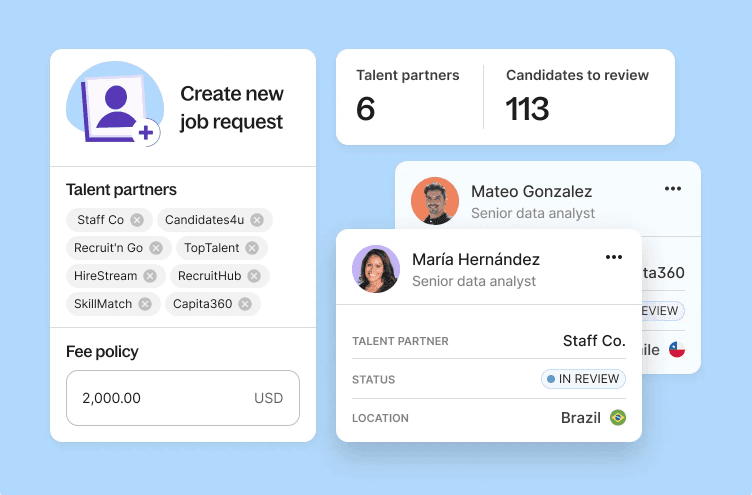
Deel is one of the most established EOR platforms globally, making it an excellent option for organizations seeking to hire quickly and legally in Israel. Deel also provides localized benefits, contract generation, and contractor management within a single dashboard.
One key advantage is that Deel often uses owned entities in certain markets, which can improve compliance and speed. Pricing typically starts at around $599 per employee/month. If you wanna find out more, check out our read our in-depth Deel review.
• They offer end-to-end solutions including payroll, tax compliance, and benefits.
• Provides automation and integrations with tools like Workday, QuickBooks, and Slack.
• Best for companies that want a premium, all-in-one global hiring platform with strong automation, deep integrations, and enterprise-grade compliance across 150+ countries.
Start hiring in Isreal with Deel
2. Multiplier
Multiplier is a fast-growing EOR provider known for its cost-effectiveness and strong compliance capabilities. It supports hiring in 150+ countries, including Israel. Startups and mid-sized businesses that want to hire abroad without paying a premium enterprise cost often finds it appealing. Despite the lower cost, it still delivers strong compliance coverage and essential HR tools.
• They generate compliant, localized employment contracts in minutes and onboard staff within 24-72 hours.
• Responsive customer support and region-specific expertise. Not sure if Multiplier or Deel is the better fit for you? Compare pricing, features, and ideal use cases in our Multiplier vs Deel comparison post.
• Best for cost-conscious companies and startups looking for a reliable, affordable EOR solution.
Get started with Multiplier today
3. Pebl
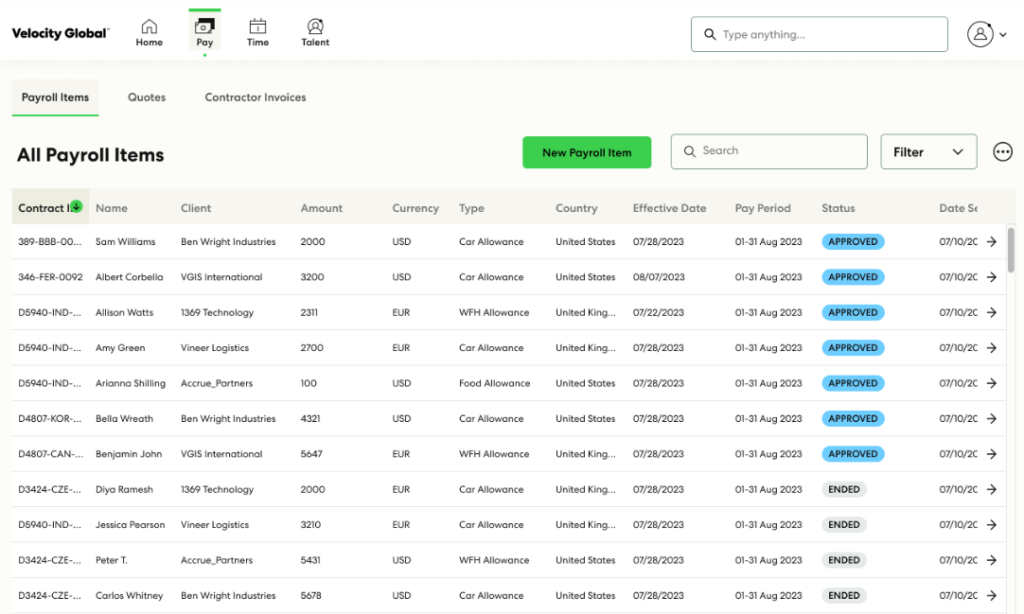
Pebl, formerly known as Velocity Global, is one of the leading EOR providers in Israel, it is designed for rapid international hiring, offering instant quotes and onboarding in less than 24 hours. Pebl stands out for its ability to support large-scale international expansion. They maintain a massive network to manage payroll, benefits, and local legal compliance for over 1,500 clients. Other features include:
• Presence in 185+ countries with strong local expertise.
• Provides a central platform for onboarding, managing, and paying international talent.
• Best for large or scaling companies that need white-glove support, consulting, and customized global expansion solutions. Get started with Pebl.
Start scaling with Velocity Global
4. RemoFirst
RemoFirst aims to simplify global team hiring. They break down barriers and create new opportunities by connecting organizations with elite talent worldwide. With a focus on people, excellence, and delivery, they enable companies to expand on their own terms without the hassles of compliance.
RemoFirst is one of the most affordable EOR providers; its pricing starts at approximately $199 per employee/month, making it a strong option for startups and small businesses looking to minimize costs while still maintaining compliance.
Other features include:
• Affordable pricing compared to many competitors.
• Access to global health coverage (medical, dental, vision).
• Best for budget-conscious startups and SMEs that want the lowest-cost EOR option with solid core compliance features.
Get started with Remofirst
5. Oyster
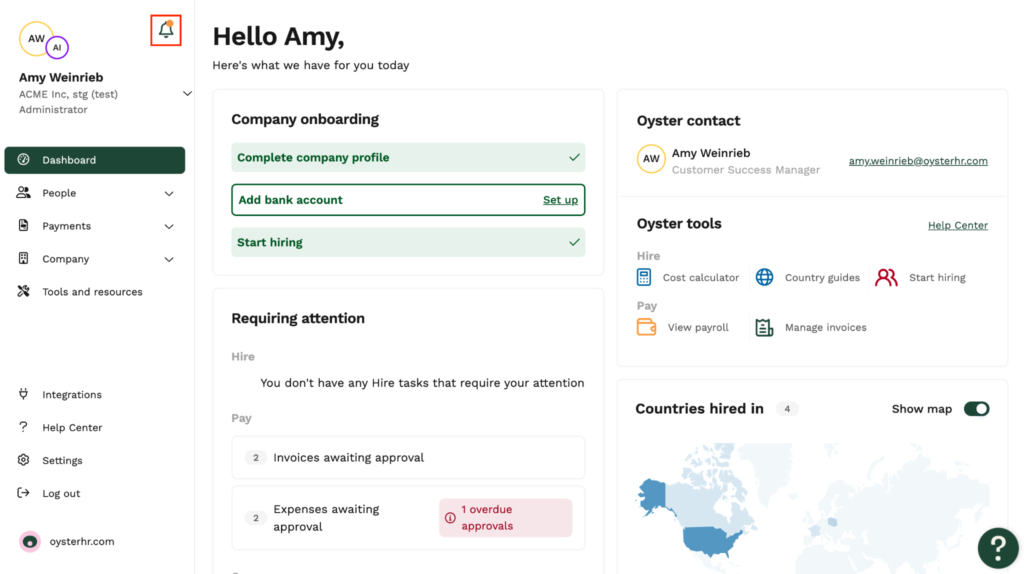
Oyster is more than a platform; it’s your strategic partner for global expansion. Their technology, backed by expert support, allows you to focus on your team while they manage the intricacies of payroll, benefits, and compliance. It enables businesses to navigate global hiring with peace of mind. Other features include:
• Enables firms to manage both contractors and full-time employees on the same platform
• Manages international payroll in local currencies including health insurance, and retirement plans
• Best for Mid-sized to enterprise teams focused on employee experience, long-term retention, and structured global workforce management.
Start your EOR journey with Oyster
Hence, integrations can make or break your hiring workflow. Before signing with any EOR, verify how well it connects with your CRM using our free EOR – CRM compatibility checker.
Quick Comparison of Top EOR Providers in Israel
| Provider | Starting Price | Key Strength | Best For |
| Deel | $599/per employee/month | Scalability and Integrations | Global startups |
| Multiplier | $400/per employee/month | Affordability and Simplicity | Cost-conscious teams |
| Pebl | $599/per employee/month | Global expansion | Large companies |
| RemoFirst | $199/per employee/month | Lowest pricing | Startups & SMEs |
| Oyster | $699/per employee/month | Remote-first team | Distributed teams |
Final Thoughts
Israel ranks as one of the best destinations for global employment with access to a highly educated population, a robust technology ecosystem, and world-class expertise; but gaining access to it is extremely difficult. Israeli employment law gives little opportunity for speculation because of mandated severance, pension contributions, recreation pay, sector-specific extension orders, and constant risk of misclassification or permanent establishment.
These obstacles are completely removed by EOR solutions. An EOR takes care of compliant contracts, accurate localized payroll, full tax and social contributions, benefits administration, and risk management by serving as your legal employer in Israel. This frees you up to concentrate on creating and managing high-performing teams rather than dealing with complexity. An EOR offers the speed, compliance, and flexibility that traditional entity setup just cannot match, whether you’re establishing a complete R&D center or recruiting your first engineer in Tel Aviv.