
















Do you know that the right CRM software for jewelry firms can completely change how you sell, communicate with customers, and run your store?
These days, accessory brands need more than spreadsheets. You need a CRM that can track sales, manage inventory, organize customer data, and automate follow-ups, all while helping you close more deals.
In this guide, I’ll walk you through the top CRM software options for jewelers in 2026. Whether you sell fine jewelry, design custom pieces, or run a fast-growing accessories brand, this list will help you choose the right CRM to boost sales, build loyalty, and grow your brand with less stress.
Why do jewelry businesse need a specialized CRM in 2026?
- Automating Follow-Ups
The best CRM for jewelry stores lets you automate follow-ups after a sale, service appointment, or inquiry. CRM software for jewelers ensures you stay top-of-mind without extra effort.
- Improving Customer Loyalty
A CRM helps you nurture connections by keeping track of birthdays, anniversaries, purchase history, and even personal notes that make customers feel loved.
However, a powerful jewelry CRM helps you build lasting relationships. With a CRM in place, you can send personalized offers that make your clients feel valued and come back for more.
- Managing High-Value Customers
Every high-value customer deserves a luxury experience. From the first inquiry to their third upgrade, the CRM keeps your most profitable clients close and satisfied.
- Tracking Repairs and Sizes
With jewelry CRM software, you can log every service request, custom order, and size adjustment in one place. It saves time, reduces mistakes, and gives customers a smoother experience, whether you’re tracking a necklace cleaning or a full redesign.
What makes a great jewellery CRM
1. Customer History
In the jewelry business, every detail matters, especially when it comes to your loyal clients. A CRM for a jewelry business should track complete customer histories, including previous purchases, ring sizes, style preferences, anniversaries, and even gemstone choices.
This helps you deliver personalized service that feels thoughtful, not salesy, and it sets you apart from generic retail experiences.
2. Repair and Service Tracking
Jewelry isn’t just bought; it’s maintained. From resizing rings to cleaning heirloom pieces, repairs are part of your ongoing customer relationship.
Furthermore, jewelry CRM software lets you log every service, track its status, and follow up automatically when it’s ready for pickup. It gives your customers confidence and shows you’re organized and professional.
3. Automated Marketing
CRM systems for jewelry are not just about storing data. They help drive more sales. Automated marketing features make your client significant. You can create drip campaigns or one-off promos that feel personal, all without doing it manually each time. It’s marketing on autopilot.
4. Mobile Access
Jewelry isn’t sold from a desk; it happens on the go, on the floor, and sometimes at pop-ups or events. That’s why mobile CRM access is a must.
Whether you’re checking client details before an in-store appointment or logging notes after a meeting, mobile access ensures your jewellery CRM is always within reach. It keeps your workflow moving wherever you are.
5. Ecommerce Integration
If you sell jewelry online, your CRM needs to work with your e-commerce platform. Integration with Shopify, WooCommerce, or custom websites allows your CRM to automatically sync customer info, order history, and stock levels.
This helps you create targeted campaigns, track buyer behavior, and even recommend products based on past purchases, making it a powerful sales and marketing engine.
Best CRM tools for Jewelry Businesses
Jewel360: Best Overall Jewelry CRM

Jewel360 is a purpose-built, cloud-based CRM and point-of-sale system created specifically for jewelers. It gives you everything you need to run both your in-store and online operations in one place, from managing custom orders and repairs to tracking inventory, monitoring sales performance, and generating reports.
Jewel360 lets you create and manage reward programs, offer gift cards, and set up personalized incentives that keep customers coming back. Store owners can also track consignment pieces, monitor staff activity, and manage the entire sales process without switching between systems.
It’s not just CRM software, it’s a complete business engine for modern jewelry retailers.
Features of Jewel360 CRM
Integrated POS and E-Commerce Platform
With Jewel360, you can manage both in-store and online sales from one unified system. It synchronizes inventory in real time across your retail POS and e-commerce store, eliminating stock errors and overselling.
Whether you’re using Shopify or a custom site, this POS for jewelry stores keeps everything connected, making it easy to track customer orders, manage product availability, and grow your business without extra tools.
Appraisals Management System
Jewelry appraisals are a key part of the sales and service process, and Jewel360 streamlines it beautifully. The platform offers built-in appraisal tools that generate accurate documentation and valuations, ideal for insurance, repairs, or resale. You store appraisals in each client’s customer profile, making it easy to pull reports or follow up when re-evaluations are needed.
Work Order Management with Automated Customer Notifications
Custom orders, repairs, and resizing jobs don’t have to be a manual mess. Jewel360’s management system lets you track each job by status, due date, and technician while keeping customers in the loop with automated SMS or email alerts when their item is ready. This level of transparency builds trust and reduces inbound “Is it ready yet?” calls.
Jewelers Mutual Integration for Care Plans
Jewel360’s integration with Jewelers Mutual lets you offer care plans and insurance protection right at checkout.
This not only boosts post-sale value but also improves customer confidence and adds a new revenue stream. It’s one more way the CRM becomes a full-service solution for jewelry brands.
Automated Marketing & Customer Engagement Tools
Jewel360 comes equipped with CRM-powered marketing automation tools that help you stay in touch with clients long after the sale. Create targeted email or SMS campaigns for birthdays, anniversaries, seasonal offers, or abandoned carts.
You can segment by purchase history, engagement level, or spending and track results from a central dashboard. It’s smart, scalable marketing that actually drives return visits.
| Pros of Jewel360 | Cons of Jewel360 |
|---|---|
| Multi-location support | Learning curve for new users |
| All-in-one system | Less third-party integration |
| Jewelry-specific inventory | More expensive than general CRMs |
HubSpot: Best Free Marketing-Focused CRM

HubSpot is the best free CRM available for startups and growing brands. With HubSpot, you can create personalized email flows that automatically check in with clients after a purchase, remind them of upcoming anniversaries, or offer something special around the holidays. You’ll know who opened your message, who clicked, and who’s ready to buy again without guessing.
Furthermore, you’ll have access to tools for managing contacts, automating email campaigns, tracking customer interactions, and organizing your sales pipeline all in one place. It’s especially useful if you want to send targeted offers, birthday discounts, or post-purchase follow-ups without juggling multiple tools.
While it’s not built specifically for jewelers, its flexibility makes it a fit for growing brands that sell online or want to sharpen their digital strategy. Plus, the free plan gives you more than enough to start building meaningful customer relationships without upfront costs.
Features of HubSpot CRM
-
Marketing Performance Reporting
Detailed analytics and reporting tools allow you to measure the effectiveness of your marketing efforts. Jewelry retailers can track campaign performance, conversion rates, and customer engagement, helping you refine strategies and allocate budget more effectively.
-
Contact Management
HubSpot CRM provides a centralized, organized system for managing customer information. Jewelry businesses can maintain detailed profiles for each client, including their contact details, product preferences, purchase history, ring sizes, and key dates like anniversaries. This enables more personalized communication and supports long-term relationship-building.
-
Sales Pipeline Tracking
With HubSpot’s visual sales pipeline, you can clearly map out every stage of the customer journey from initial inquiry to final sale. This is especially useful for high-value transactions such as custom designs or engagement rings, where multiple touchpoints and approvals may be involved. It ensures your team never loses track of leads or pending deals.
-
Task and Activity Reminders
HubSpot makes it easy to schedule and manage tasks, such as follow-up calls, order updates, or client consultations. These reminders ensure that no customer interaction is missed, which is critical in a relationship-driven business like jewelry.
| Pros of HubSpot | Cons of HubSpot |
|---|---|
| Free plan with essential CRM features | Advanced features require paid plans |
| Strong marketing automation and email tracking | Learning curve for automation and reporting |
| Easy to use and quick to set up |
3. Jwelly ERP: Best for Jewelry manufacturing

Jwelly ERP is a fully integrated software suite tailored exclusively for the jewellery industry. Whether you’re a retailer, wholesaler, or manufacturer, it brings all your operations into one centralized platform.
From billing and stock management to karigar (artisan) job tracking, gold scheme handling, and multi-branch coordination,
Jwelly simplifies the complex workflows of jewellery businesses. It also includes a mobile app for remote access and a built-in loyalty system to help you engage and retain customers more effectively.
Features of Jwelly ERP
Advanced Inventory Management
Jwelly ERP gives you full control over your precious metal inventory with precise, real-time tracking, including weight-based calculations. You can monitor stock by item, location, or category, and get instant updates after sales, returns, or transfers. Automated alerts also notify you when stock levels are low or when certain items become fast-moving or stagnant.
2. Complete Customer Management
Build stronger client relationships with a centralized view of every customer’s profile, purchase history, and preferences. Jwelly allows you to track loyalty points, birthday reminders, and gold scheme participation, making it easy to offer personalized promotions, upsells, or rewards that keep customers coming back.
-
Smart Product Catalog Tools
Create professional-looking product catalogs in minutes using built-in AI tools. Automatically remove photo backgrounds, enhance image quality, and add bulk pricing and watermarking.
The system keeps your catalog synced across your website and mobile app so every product stays up-to-date and ready for online or in-store browsing.
4. Intelligent Business Alerts
Jwelly’s Smart Alerts system keeps you informed at the right time. The software sends automated WhatsApp and SMS notifications, so your team never misses a key event or opportunity to follow up.
5. Real-Time Business Analytics
Gain full visibility into your jewelry business performance with Jwelly’s analytics dashboard.
You can analyze sales trends, inventory turnover, item-wise profitability, and even karigar performance. Predict demand patterns and make informed purchasing decisions using smart visual reports.
6. Financial Reporting with GST & Tally Integration
Track your finances with detailed reporting tools tailored for jewelry businesses. Generate profit and loss statements, balance sheets, and GST reports (including GSTR-1 and 3B).
All reports can be exported in Excel or PDF and are designed to integrate smoothly with your Tally accounting system for simplified handoffs to your CA or finance team.
| Pros of Jwelly | Cons of Jwelly | |
|---|---|---|
| Tailored features for jewellery retail and wholesale | Limited modern marketing automation tools | |
| Good for detailed day‑to‑day operations | Some versions are desktop‑focused | |
| Strong inventory and repair tracking |
4. Salesforce: Best CRM for Luxury Jewelry Brands

Salesforce is the world’s leading customer relationship management platform, trusted by brands across every major industry, including high-end retail. It manage and scales customer relationships. It offers unparalleled customization, advanced automation, and deep analytics tailored to how your business operates.
Now enhanced with AI capabilities, Salesforce is helping businesses reimagine how they work. With tools like Agentforce, its AI-driven assistants can automate responses, take action on behalf of employees, and optimize customer interactions across channels.
Whether you’re a boutique jeweler with a loyal following or a luxury brand managing global clientele, Salesforce CRM gives you the infrastructure to scale high-touch service without losing the personal feel.
Features of Salesforce
Custom Sales Pipelines for Jewellery Workflows
Jewelry sales are rarely one-click purchases. Whether you’re managing custom design consultations, appraisals, or high-ticket orders, Salesforce lets you build a sales process tailored to your exact workflow, ensuring no step or follow-up is missed.
2. Comprehensive Client Profiles
Salesforce allows you to maintain detailed records for each customer, including purchase history, preferred materials or gemstones, ring sizes, anniversaries, and repair history. This enables your team to deliver a highly personalized, white-glove experience that luxury clients expect.
3. AI-Powered Lead Prioritization
With built-in AI tools like Agentforce, Salesforce helps identify and prioritize high-intent leads based on client behavior. For example, if someone frequently browses diamond rings or visits multiple pages on your website, the system can alert your team to follow up while the interest is hot.
4. Real-Time Analytics and Sales Insights
Salesforce provides in-depth reporting dashboards that show what’s selling, which campaigns are working, and how each store or sales associate is performing. Use these insights to optimize inventory, promotions, and staff performance.
| Pros of Salesforce | Cons of Salesforce |
|---|---|
| Highly customizable for complex workflows | Steeper learning curve than simpler CRMs |
| Powerful reporting and analytics | Requires configuration to fit jewellery workflows |
| Huge ecosystem of integrations | Higher cost, especially for advanced modules |
Monday.com: Best for collaboration

Monday.com is a cloud-based work operating system that businesses across industries use to build custom applications for handling specific workflows. As stated, it helps teams collaborate, plan activities, and visualize work in a clear, structured way, which makes it a strong foundation for CRM use.
When adapted as Monday Sales CRM, the platform becomes a flexible customer relationship management solution for jewelry businesses that want visibility, organization, and teamwork without heavy complexity.
Monday.com allows you to design workflows that reflect how your jewelry business actually operates.
With its visual boards and customizable pipelines, teams can track leads, manage customer interactions, and monitor order progress in real time. Everything is laid out clearly, making it easy for managers and sales associates to stay aligned and responsive.
Features of Monday.com
Visual Sales Pipelines
Its drag-and-drop pipelines make it easy to track every stage of a sale from the first showroom visit or online inquiry to final payment and delivery.
This visual clarity helps sales teams quickly identify which leads need attention, where deals are getting stuck, and which clients are ready to close, especially important for high-ticket or custom jewelry orders.
2. Custom Dashboards
Monday.com lets you create real-time dashboards that display what matters most to your business.
You can monitor best-selling collections, staff performance, deal volume, and even inventory tasks. It’s ideal for jewelry retailers and studio owners who want to keep tabs on both daily operations and long-term trends all from one place.
3. Team Collaboration
This software helps every department stay aligned.
Designers, sales reps, and customer service staff can work on the same board, tagging teammates, leaving internal notes, uploading client sketches or images, and assigning follow-up tasks.
Also, it eliminates miscommunication and ensures the client experience stays smooth, even across multiple touchpoints.
4. Sales Tracking
Your sales reps can log all customer interactions, including emails, phone calls, and showroom visits, with time stamps and status updates.
With every client file in one place, it’s easier to nurture leads, follow up on custom design approvals, or recommend complementary pieces based on past purchases. This centralized visibility is especially useful for keeping high-value clients engaged and moving toward a sale.
5. Workflow Automation
Manual follow-ups and repetitive admin tasks can slow your team down. Monday.com’s automation tools help eliminate that bottleneck. For example, when a custom order moves to “Ready for Pickup,” an email or SMS can be sent to the client automatically. This not only saves time but also ensures nothing falls through the cracks even during busy seasons.
| Pros of Monday.com | Cons of Monday.com CRM |
|---|---|
| Clean, modern interface that’s easy to navigate | Free and Basic plans have limited functionality. |
| Offers a wide range of features for custom workflows | All paid plans require a minimum of three users |
| Real-time team collaboration keeps everyone in sync. | Admin controls are only available in higher-tier plans |
Keap: Best for marketing automation
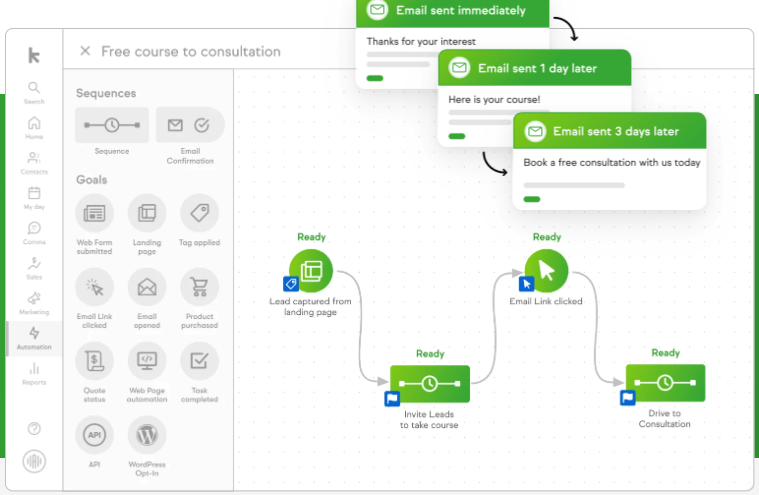
Keap (previously Infusionsoft) is a customer relationship management system designed to help small and developing organizations automate their sales and marketing procedures.
It focuses on organizing contacts, automating follow‑ups, and streamlining mundane processes for small business owners. Teams can spend less time on admin and more time with consumers.
Keap is ideal for jewelry firms looking to improve client connections, manage follow-ups, and increase repeat business without using numerous technologies. Its automation features are particularly effective for email and SMS campaigns, lead nurturing, and appointment reminders.
Features of Keap
Contact Organization
Keap stores all customer details in one place, including names, phone numbers, purchase history, notes, and key dates, so you can easily reference client information for personalized follow‑ups.
2. Automated Follow‑Ups
Set up automated email and text message sequences that engage customers after consultations, follow up on quotes, or re‑engage past buyers without manual effort.
-
Sales Pipeline Management
Track leads and deals through customizable stages so you always know where a potential sale stands, whether it’s an inquiry about a custom piece or a high‑value purchase.
4. Appointment Scheduling
Keap offers built‑in appointment booking tools so clients can schedule consultations or showroom visits with minimal back‑and‑forth.
-
Marketing Automation Tools
Create automated campaigns that send targeted messages based on customer actions or preferences, helping you stay top‑of‑mind with anniversaries, holidays, or new collection launches.
6. E‑Commerce and Payment Integration
Keap integrates with ecommerce and payment systems so you can process orders, track purchases, and manage invoices from the same platform.
| Pros of Keap CRM | Cons of Keap CRM |
|---|---|
| Ease of use | Limited customization |
| Built in tools | Basic reporting |
| Budget friendly | Smaller ecosystem |
| Simple Automation |
7. Zoho CRM: Best Affordable CRM
Zoho CRM is a versatile CRM that enables jewelry sellers to manage leads, simplify sales processes, and automate mundane operations with a minimal learning curve.
This software can scale with your business, from a tiny boutique to a multi-location enterprise. It offers features for sales monitoring, customer involvement, analytics, and basic automation.
Zoho CRM is ideal for jewelry brands seeking a cost-effective CRM with robust features and flexibility for growth. It balances power and simplicity.
Features of Zoho CRM
Integration with Other Zoho and Third‑Party Apps
Zoho CRM integrates with other Zoho products (like Zoho Inventory and Zoho Books) and many third‑party apps (like Gmail, Outlook, and e-commerce platforms), giving you the flexibility to build a connected business stack.
Sales Tracking
With Zoho CRM, you monitor every sale from first contact to closing the deal. Whether it’s a custom order, bridal consultation, or walk‑in purchase, you can log activity, record offer details, and see which stage each potential sale is in.
This visibility helps your team follow up at the right time and ensures no opportunities slip through the cracks, especially in high‑value transactions.
Workflow Automation
Workflow automation in Zoho CRM reduces manual work by setting rules that trigger actions based on your business processes.
For example, you can automatically assign new leads to a specific salesperson, send follow‑up reminders after a consultation, or update deal status when a payment is received. This improves consistency and frees up your team to focus on customer service and sales.
Email Campaigns
Zoho CRM allows you to run targeted email campaigns directly from the platform.
Segment customers based on purchase history, preferences, or engagement levels and send promotional messages, collection launches, or follow‑ups without switching to a separate tool.
Campaign tracking shows open rates and engagement, helping you see what resonates with your audience.
| Pros of Zoho | Cons of ZOho |
|---|---|
| Clear sales tracking that matches the jewellery sales process | Requires setup and customization to match jewellery workflows |
| Affordable pricing and flexible plans | Some advanced automation features are only in higher‑tier plans |
| Email campaign tools built into the CRM | Email campaign tools are not as advanced as dedicated email platforms |
| Workflow automation that saves time and improves consistency |
8. Salesmate : Best in Sales and Marketing
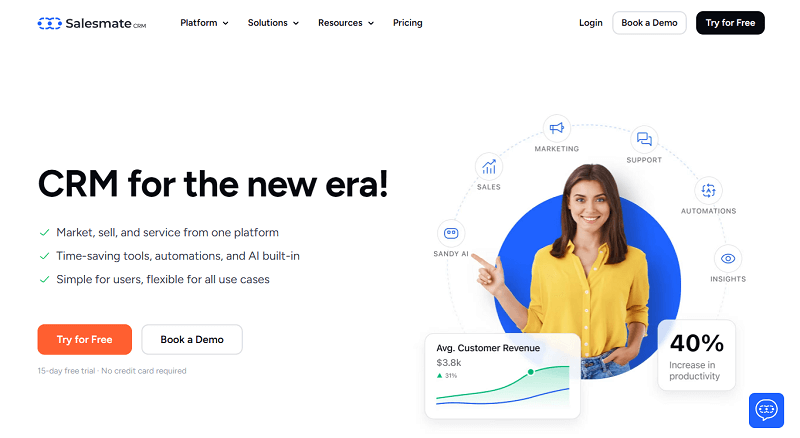
Salesmate CRM is a platform for managing customer relationships that helps small and medium-sized organizations track sales activity, manage customer contacts, and enhance follow-ups. Salesmate gives sales processes structure without being unduly complicated for jewelry firms.
It provides companies with a 360-degree perspective of customer interactions, simplifying follow-ups, improving the accuracy of transaction monitoring, and converting prospects into devoted customers.
Features of Salesmate
Personalized Client Profiles
Salesmate gives a comprehensive 360-degree view of each customer, including their purchase history, product preferences, communication records, and key dates. This enables more informed, high-touch client interactions that enhance loyalty and repeat business.
- Customer Segmentation and Targeting
Segment your audience based on behavior, interests, demographics, or location. This allows for tailored messaging, promotions, and experiences that align with customer needs irrespective of your business needs.
- Real-Time Sales Intelligence
Salesmate’s sales intelligence feature provides your sales team with live data on customer engagement, product trends, and deal progress. These actionable insights help drive faster decision-making and improve conversion rates, both online and in-store.
- Streamlined Integrations
Easily connect Salesmate with e-commerce platforms, email marketing tools, and other systems to ensure clean data flow, accurate syncing, and efficient operations across your business.
| Pros of Salesmate | Cons of Salesmate |
|---|---|
| Simple and intuitive interface that’s easy for teams to adopt | Some advanced automation features may require higher plans |
| Customer segmentation helps tailor marketing and service. | Limited integrations compared to larger CRM platforms |
| The visual pipeline keeps sales processes transparent | Email campaign tools are not as advanced as dedicated email platforms |
Key Benefits of CRM software for Jewelry stores
- Centralized Order and Sales Administration
A CRM organizes all transactions in a single system, from walk-in sales to bespoke orders and online purchases. Without using spreadsheets or memory, sales teams can keep track of questions, quotes, approvals, and follow-ups.
This methodical approach enhances the whole purchasing experience and minimizes lost chances, particularly for expensive jewelry transactions.
- Simplified Communications with Customers
Every customer’s journey is fully documented by a CRM, including purchase history, support requests, preferences, and previous conversations. This enables your staff to rapidly learn about a customer’s past purchases, preferences, and any problems they may have had.
As a result, employees are able to address issues more quickly and provide a more customized experience.
- Increased Engagement
With comprehensive client information kept in your CRM, you may customize marketing communications to each person’s preferences. Customers who often purchase diamond jewelry, for instance, might receive advertising on diamonds. In contrast, others would see messages about bracelets or necklaces.
- Enhanced Client Loyalty
By facilitating follow-ups, feedback gathering, and loyalty initiatives, CRM systems assist you in preserving long-term relationships. You may monitor client satisfaction, find areas for development, and automatically ask for reviews following transactions.
Additionally, CRM solutions facilitate the management of loyalty programs that reward customers for recurring transactions. These initiatives encourage consumers to visit your store again rather than going to a rival.
- Enhanced Data Protection
In the jewelry business, protecting consumer data is essential. Role-based access rights, secure logins, and data encryption are some of the features that trusted CRM systems provide.
Owners of businesses have the ability to restrict access to sensitive data, guaranteeing that workers only see information pertinent to their position. When used in conjunction with appropriate training and adherence to data protection laws, a CRM contributes to the accuracy and security of client data.
- Data-Based Business Decisions
A CRM gathers, arranges, and transforms corporate data into insights that may be put to use. You can monitor best-selling items, trace purchasing patterns, examine consumer behavior, and assess team effectiveness.
These insights assist jewelry companies in maintaining their competitiveness, better organizing their inventory, and modifying their marketing tactics based on actual data rather than conjecture
How to choose the right CRM for Jewelry
- Your Team’s Ease of Use
Give top priority to platforms with mobile access and clear, user-friendly interfaces. You want something that sales representatives, office managers, and showroom employees can pick up fast and find enjoyable to use.
- Simple Integrations
The tools you employ, like email marketing platforms, e-commerce sites (Shopify, WooCommerce), accounting software, or point-of-sale systems, should work effectively with your CRM. Time is saved, and double-entering is avoided with seamless integrations.
- Automated Function
From emailing follow-ups to reminding clients about pickups or loyalty points, automation helps you save time and maintain consistency. Birthday promotions and abandoned cart reminders can increase retention with little work if your company depends on recurring customers.
- Budget and Price Schedule
Some CRMs appear cheap at first, but they charge more for additional features. Make sure you understand what each plan includes, particularly if you’ll require more users, automation, or integrations.
- Industry-Specific Features
Jewelry-specific CRMs (such as Jewel360 or Jwelly) offer functions like workshop management, metal weight calculations, and appraisal tracking. These specialized tools could save you a great deal of customized time if your company is sophisticated.
Conclusion
More than just keeping track of contacts, the ideal CRM for your jewelry company will enhance customer service, expedite sales, and create conversion-focused marketing.
If you require something designed just for jewelers, Jewel360 has you covered with features like POS integration, repair tracking, and loyalty management that are all industry-specific.
However, if your primary goal is to build your business through digital marketing, HubSpot CRM stands out. It’s easy to use, automation-ready, and great for jewelry firms that sell online or run campaigns.
Furthermore, its free tier enables you to test before scaling, and its email, pipeline, and follow-up capabilities are among the best in the CRM business.
That being said, each firm is unique.
- Jwelly ERP provides extensive industry-specific functionality for wholesalers and karigar operations.
- Salesmate simplifies and automates small jeweler teams.
- Monday.com is ideal for creating visual workflows and collaborating with your team.
- Zoho CRM is a flexible and cost-effective choice that provides comprehensive monitoring and reporting.
- Salesforce includes the strength and flexibility that luxury brands seeking enterprise-level solutions.
- Keap specializes in automation and appointment management, particularly for service-oriented enterprises.
At the end of the day, the finest jewelry CRM software is one that is tailored to your operations, sales style, and growth objectives.
Frequently Asked Questions
If you want a CRM built specifically for jewelers, Jewel360 is often the best fit because it supports POS + inventory + repairs + loyalty in one system. If you want a flexible, marketing-first CRM (especially for online growth), HubSpot CRM is a strong option.
HubSpot CRM is one of the best free CRM options because it includes contact management, pipeline tracking, email tools, and reporting. It’s great for small brands that want to start without upfront costs.
For simplicity, Salesmate and Zoho CRM are usually easier to roll out for small teams. If you want strong automation (and don’t mind a learning curve), Keap can also work well.